Your Mind Is Not Broken, It's Just Tired
Why Georgia's wilderness is the reset you've been ignoring
 By Jurijs Ovcinnikovs · Founder, Justvia Bespoke Travel · 12 May 2026
The mind does not break. That is a comforting lie we tell ourselves when we want permission to stop.
What actually happens is simpler, and worse. The mind gets tired. And a tired mind does not shut down, it looks for shortcuts. Fast happiness. Instant relief. Anything to stop the noise. That is when the damage happens.
This is a piece about why that occurs, what it costs you, and why a week in the mountains of Georgia (the country in the Caucasus, not the state in America) might be the most rational decision a burned-out person can make.
The trapThe comfort zone is not your friend, it is your ceiling
The comfort zone is not a safe place. It is a place where nothing costs you anything. The mind loves it there. No effort. No fear. No resistance. Just the quiet hum of doing things you already know how to do.
The problem is that growth does not live in that quiet hum. It lives just past where things stop feeling easy. That is where new skills are built, where understanding deepens, where information stops being just information and becomes something you actually know.
Step outside your comfort zone and you spend energy. But that energy, invested in something genuinely valuable, returns to you transformed. Not as tiredness. As capability.
The key word is control. A muscle grows when you lift more than you usually do, but not so much more that you tear the ligament. The line between growth and injury is real. Most people never find it because they either avoid it completely or blow straight through it without noticing.
The costWhat happens when you push without pausing
Modern life has a particular way of wearing people down. Not through one catastrophic event, but through the accumulation of small relentless speeds. Always moving. Always producing. Never quite finishing anything. Multiple tasks at once, which the mind genuinely hates, despite what productivity culture insists.
Over time, this constant speed converts into something else. The energy that once drove ambition, the desire to build, to create, to move forward, curdles into apathy. Then into burnout. Then into something that looks like depression but is really just a mind that has been running too hot for too long with no recovery built in.
The shortcutWhy the mind reaches for the wrong things
When the mind has been in sustained denial, pushing through discomfort without resolution, it starts looking for the fastest route back to balance. Not the healthiest route. The fastest. A cold beer at the end of a broken week. An afternoon of deliberate inactivity that feels like relief and leaves you more depleted than before.
These are not character flaws. They are the mind's emergency mechanism, a rational response to an irrational situation. The problem is that the mechanism is short-sighted. It reaches for a shortcut and creates a longer route. The hangover comes. The problems return. The mind, in a long state of resistance, does not need indulgence. It needs genuine equilibrium. And that is something only real rest, not escape, can provide.
The mechanismNature is not a backdrop, it is the mechanism
There is a reason people feel different in mountains and forests. Not calmer in a vague, poetic sense. Measurably different. Research on time spent in natural environments consistently shows reductions in the body's stress hormones, improved sustained attention, and reduced activity in the parts of the brain associated with rumination and anxious repetition. The effect is not metaphorical. It is physiological.
The mind responds to nature because nature is genuinely different from everything else in modern life. It does not demand anything. It does not send notifications. It does not reward multitasking. It simply is. When you enter a space that operates on a completely different timescale, geological, seasonal, ancient, something in the mind recalibrates. The Caucasus does this particularly well.
SvanetiWhat Svaneti does to a tired mind
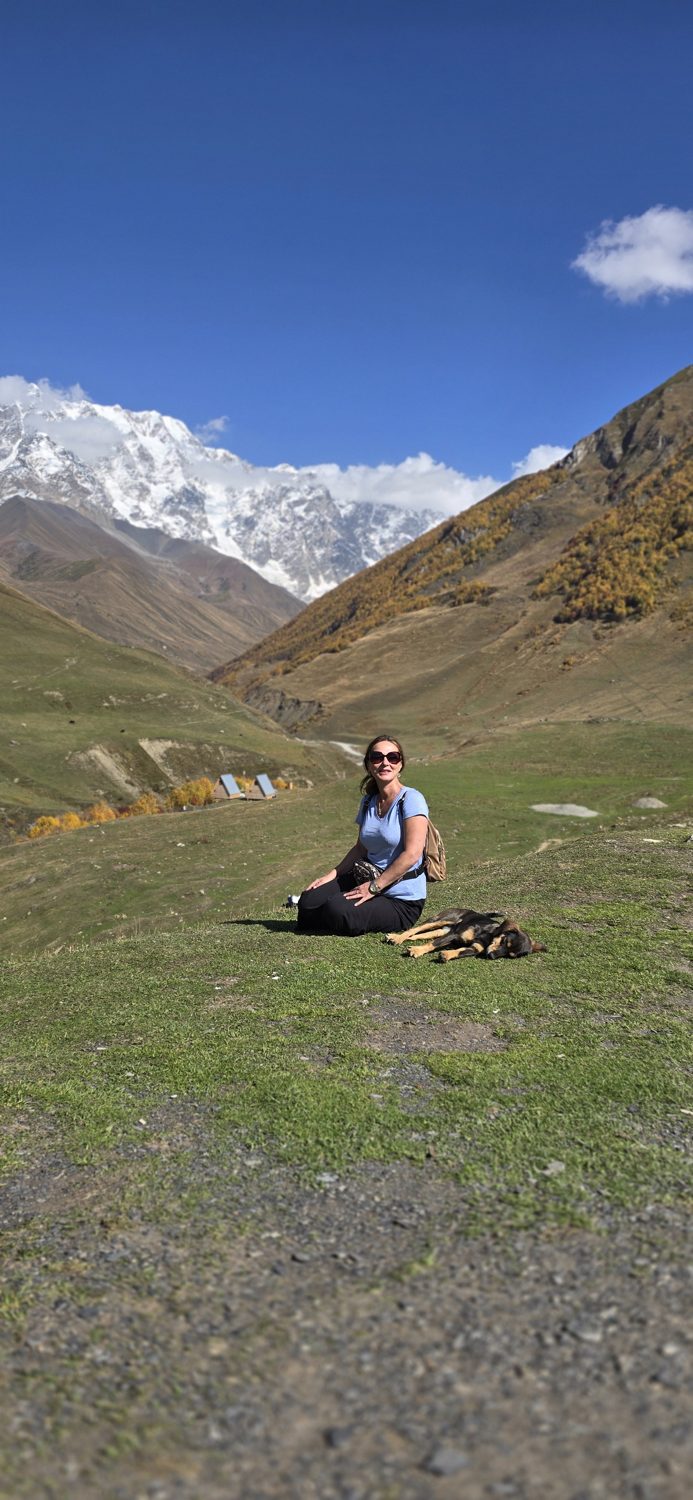
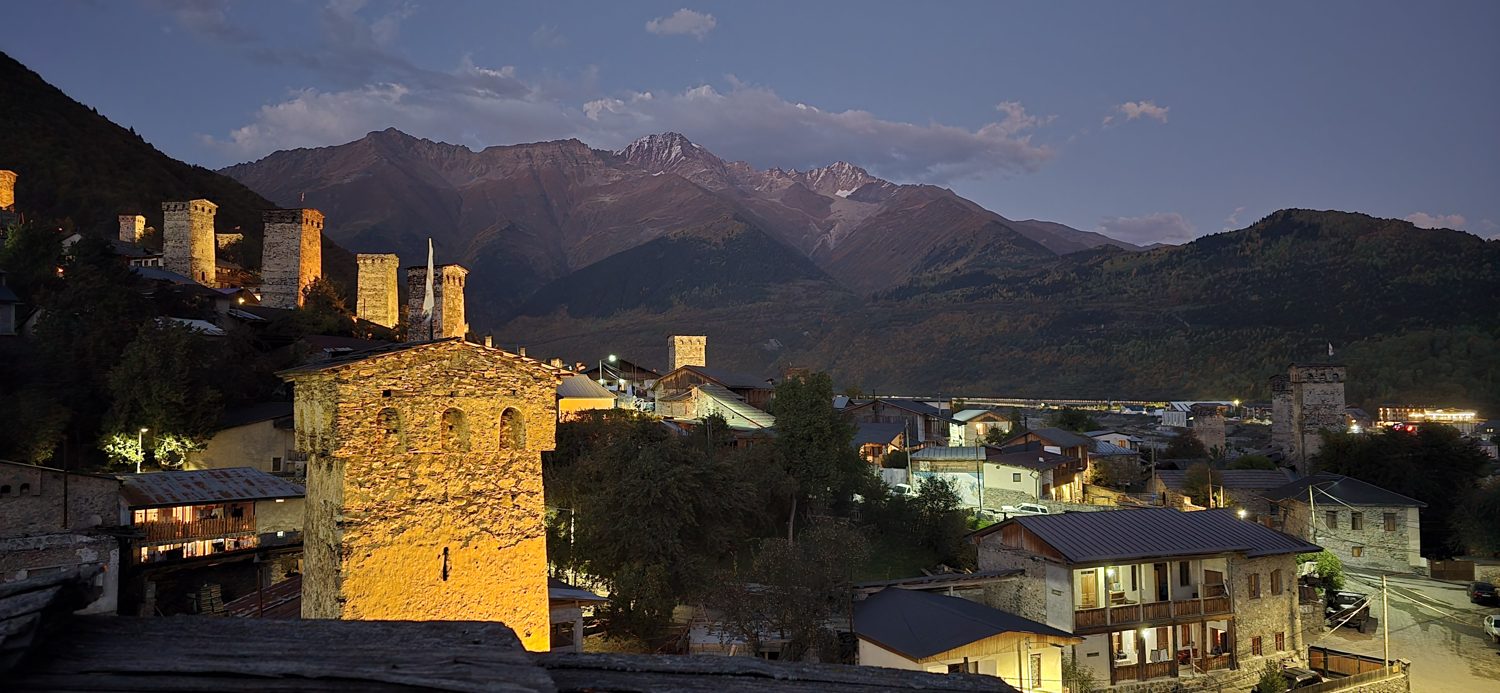
Svaneti is remote in a way that matters. Not remote in the sense of being difficult to reach, though it takes commitment. Remote in the sense that when you arrive, you understand you have left something behind. At over 1,400 metres, the air in Mestia is physically different. Cooler, thinner, cleaner. The first few hours, you notice your breathing. You slow down without deciding to.
The hiking trails here are not manicured. The ground is uneven and honest. Your legs ache in a way that is completely real. And in that reality, something in the mind relaxes, because the body has been given something genuine to do, and there is nothing else to think about while you do it. In Ushguli, one of the highest permanently inhabited villages in Europe, the silence in the early morning is not empty. It is full of wind, and birdsong, and the sound of a river somewhere below. The mind, encountering this, does not know what to do with it at first. Then it remembers.
KakhetiWhat Kakheti does to a restless one
Kakheti works differently. Where Svaneti asks you to exert yourself, Kakheti invites you to slow down. The landscape here is horizontal, rolling vineyard country in the eastern foothills, framed by the Greater Caucasus to the north. In late summer and early autumn, the air carries the smell of fermenting grape. The light in the afternoon is the colour of the wine.
For minds that have forgotten how to be present, Kakheti is a practical school. The restlessness that arrived with you gradually loses its urgency. Not because anything was solved, but because the environment makes urgency feel slightly absurd. There is no rushing a wine that took a year. There is no multitasking a meal that lasts four hours. The mind, given permission to move slowly, often discovers it prefers it.
The principleOne thing at a time
The mind's natural state is single focus. One action, fully inhabited. When a person does one thing completely, walks a trail, tastes a wine, watches the light change on a mountain face, there is satisfaction in it. Not excitement. Satisfaction. The deeper, quieter version.
Georgia, particularly in the mountain villages and vineyard regions, is one of the few places in Europe where the pace of daily life genuinely supports single focus. Because there is often only one thing to do, and it is directly in front of you. Clarity. Awareness. One direction. This is not a philosophy. It is a description of what a week in the Caucasus can return to you if you let it.
Plan your journey with Justvia
Justvia Bespoke Travel designs private and small-group journeys to Georgia for UK travellers, including dedicated Svaneti hiking itineraries and Kakheti cultural tours, tailored to your pace and fitness level. International flights are not included in tour pricing; we advise on flights separately.
Good to knowFrequently asked questions
Is Georgia a good destination for a nature retreat or wellness trip?
Yes, and it remains significantly less crowded than Alpine or Scandinavian alternatives. Svaneti offers mountain trekking at genuine altitude with medieval villages and minimal mass tourism. Kakheti provides a slower, wine-country pace ideal for rest and cultural immersion.
Do I need to be an experienced hiker to visit Svaneti?
No. Svaneti has trails for a wide range of fitness levels, from easy village walks to multi-day treks. Justvia tailors every itinerary to your specific capability. The region itself, not just the hiking, provides the restorative effect.
When is the best time to visit Georgia for nature, hiking, and vineyards?
May to June and September to October are optimal: mild temperatures, clear skies, and the landscape at its most vivid. The Kakheti harvest season is particularly special.
Are international flights included in Justvia's Georgia tour prices?
No. International flights from the UK to Georgia are not included in tour pricing and are booked separately. This is stated clearly on every tour page.
Jurijs Ovcinnikovs, founder of Justvia Bespoke Travel, a UK travel agency running small-group and bespoke journeys to Georgia. Every journey is designed and managed by Justvia, working with carefully selected local guides, drivers and operating partners.
Justvia is a UK travel agency specialising in bespoke and small-group journeys to Georgia, the Caucasus. All tours are designed for English-speaking travellers seeking genuine experience over mass tourism.
Editorial strategy and digital production by MariCleo Studio.