Giorgoba: How Georgia Celebrates St George's Day on 23 November
England remembers St George on 23 April. Georgia marks the same feast on 6 May, then gives him another day on 23 November, a distinctly Georgian tradition. Here is what Giorgoba is, what happens on it, and where to find the saint in the mountains of Svaneti.
 By Jurijs Ovcinnikovs · Founder, Justvia Bespoke Travel · 14 October 2026
If you are British, you already know this saint.
St George is England's patron, the red cross on the flag, the dragon in every pub sign. He is also the patron saint of Georgia, the small country on the Black Sea between Russia, Turkey, Armenia and Azerbaijan, and there he is taken a good deal more personally.
Georgians mark St George twice a year. The spring feast is the same one England keeps, on a different date. The second, Giorgoba on 23 November, is a public holiday and, according to Georgian church tradition, a distinctly Georgian feast.
The short answerWhat is Giorgoba?
Giorgoba (გიორგობა) is St George's Day in Georgia, celebrated on 23 November. It is one of the country's official public holidays: offices and banks close, churches hold special services, and families gather at the table.
In 2026, 23 November falls on a Monday, so for many Georgians it makes a long weekend.
Two datesWhy does Georgia have two St George's Days?
The Georgian Orthodox Church uses the Julian calendar for fixed feast dates such as these, currently thirteen days behind the Gregorian calendar used in Britain.
6 May in today's civil calendar corresponds to 23 April in the Julian calendar. It commemorates St George's death, the same event England marks on 23 April.
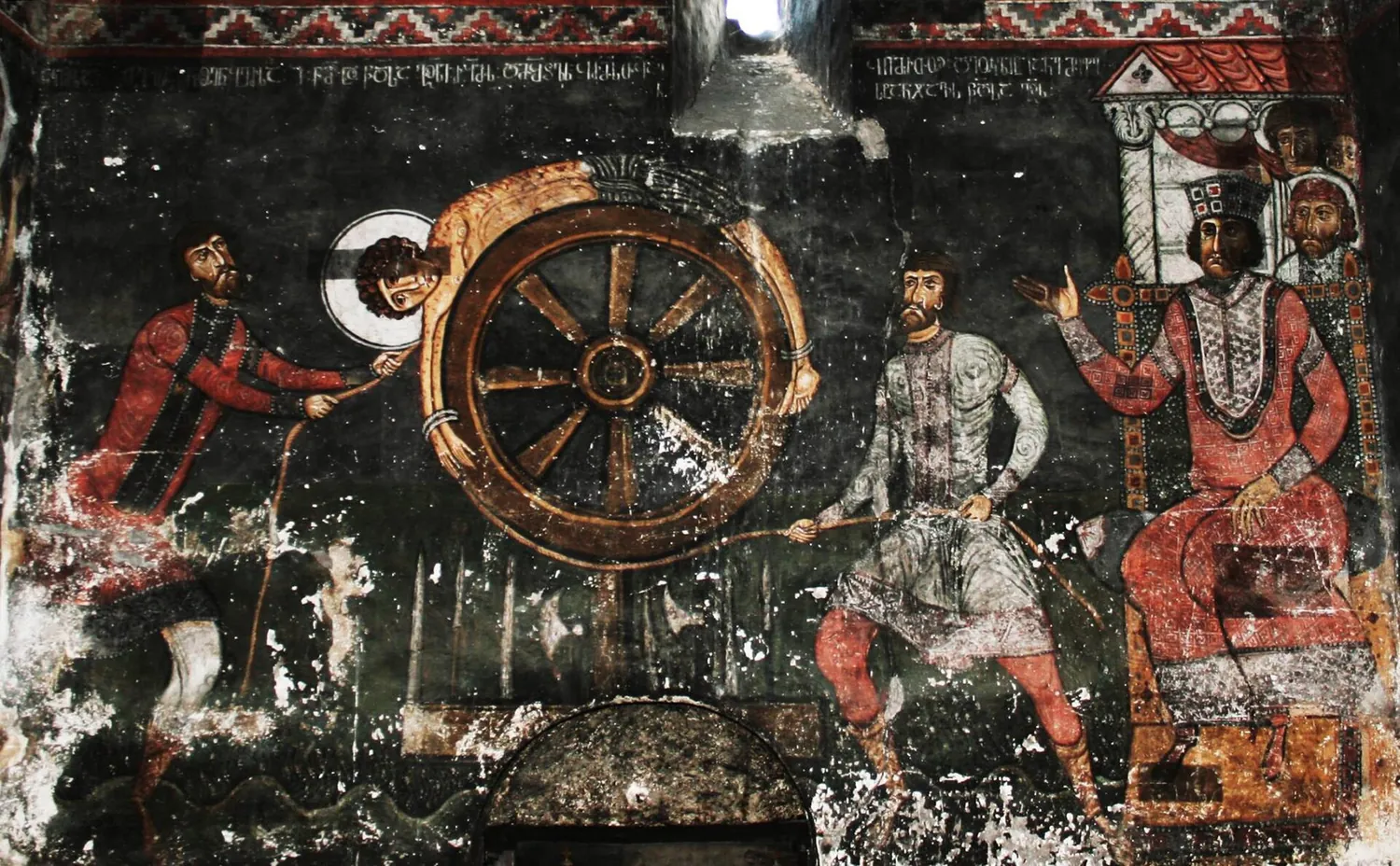
23 November is the distinctly Georgian one. Church tradition holds that it was instituted by St Nino, the woman credited with bringing Christianity to Georgia in the 4th century, and that it remembers St George's martyrdom: the day he was tortured on a wheel for refusing to give up his faith.
Only the November date is a public holiday. The May feast is kept in church, but life carries on.
The saintWhy does St George matter so much in Georgia?
Partly because he is everywhere. Georgian tradition speaks of 365 dedications to St George, one for every day of the year. The 18th-century historian Vakhushti Bagrationi went further, writing that there was scarcely a hill without a church to the saint. Whether or not you count them, you will pass a few on any drive.
He is on the national coat of arms, as a mounted figure slaying the dragon. And Giorgi is the most common male given name in Georgia overall, which is why so many Georgians you meet are called Giorgi, Gia or Gogi.
Visitors often assume the country is named after him. That is debated: the Georgian name for Georgia is Sakartvelo, and the English name has several proposed origins. Medieval European writers, though, were convinced the people were called Georgians because they revered St George above all others, and it is easy to see why they thought so.
On the dayWhat actually happens on Giorgoba?
Church bells ring across the country. Festive liturgies are held everywhere, including a solemn service at Svetitskhoveli Cathedral in Mtskheta, the old capital, half an hour's drive north of Tbilisi.
After church, many families gather around the table. For them Giorgoba becomes a feast day in the most literal sense: a supra, wine, toasts led by a tamada, and often singing that starts politely and does not stay that way. Anyone called Giorgi has a name day and gets more attention than usual.
If you are in Georgia that day, the greeting is Gilotsavt Giorgobas!, which simply means "Happy Giorgoba".
Some villages keep older customs alongside the church service. Regional names for the day still exist, and in a few places the feast carries traditions that predate Christianity. These are local and vary from valley to valley, so we would never promise one to a traveller as a show.
In the mountainsWhere to find St George in Svaneti
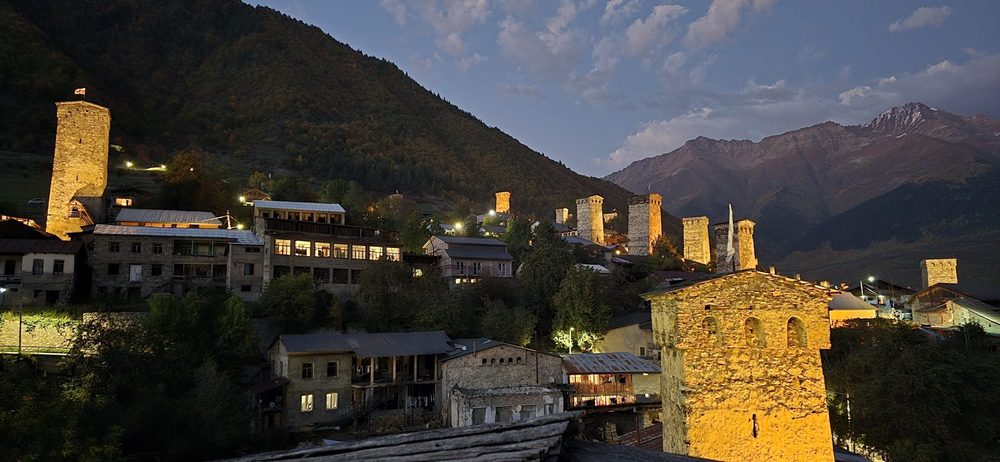
Svaneti, the high mountain region in Georgia's north-west where we run our Warm Svaneti walking week, has its own name for the saint. In the Svan language he is Jgrag, and you will see that name on village churches across the region.
St George is especially prominent in Svaneti's medieval churches and religious art. In the small church at Nakipari, in the Mestia district, a painter called Tevdore covered the interior with frescoes in 1130, including a scene of St George on the wheel: the very event Giorgoba remembers.
The Svaneti History and Ethnography Museum in Mestia holds icons from the region's churches made between the 10th and 14th centuries, in silver and in tempera on wood. Among its treasures is an 11th-century icon of St George spearing the Roman emperor Diocletian, the man held responsible for his death, rather than the familiar dragon. It was made by the Svan craftsman Asan of the Gvazavaisdze family.
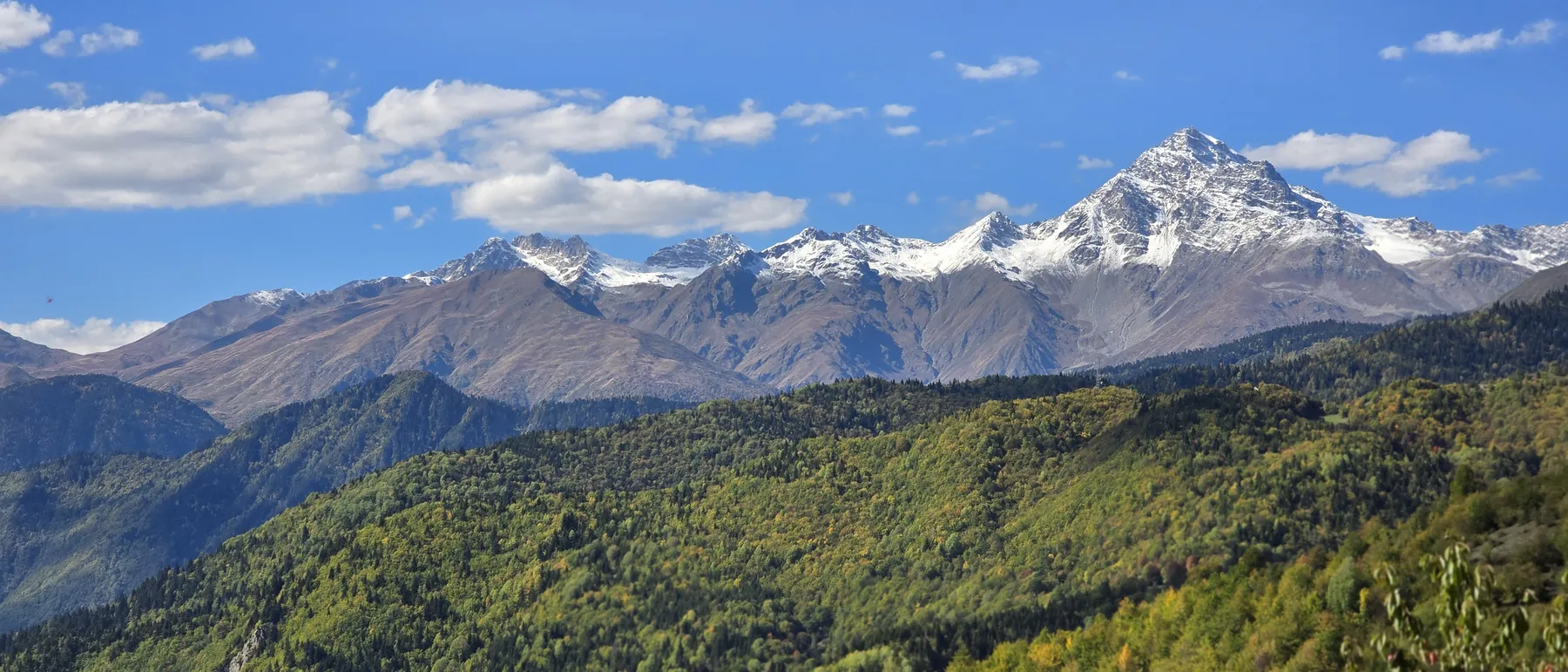
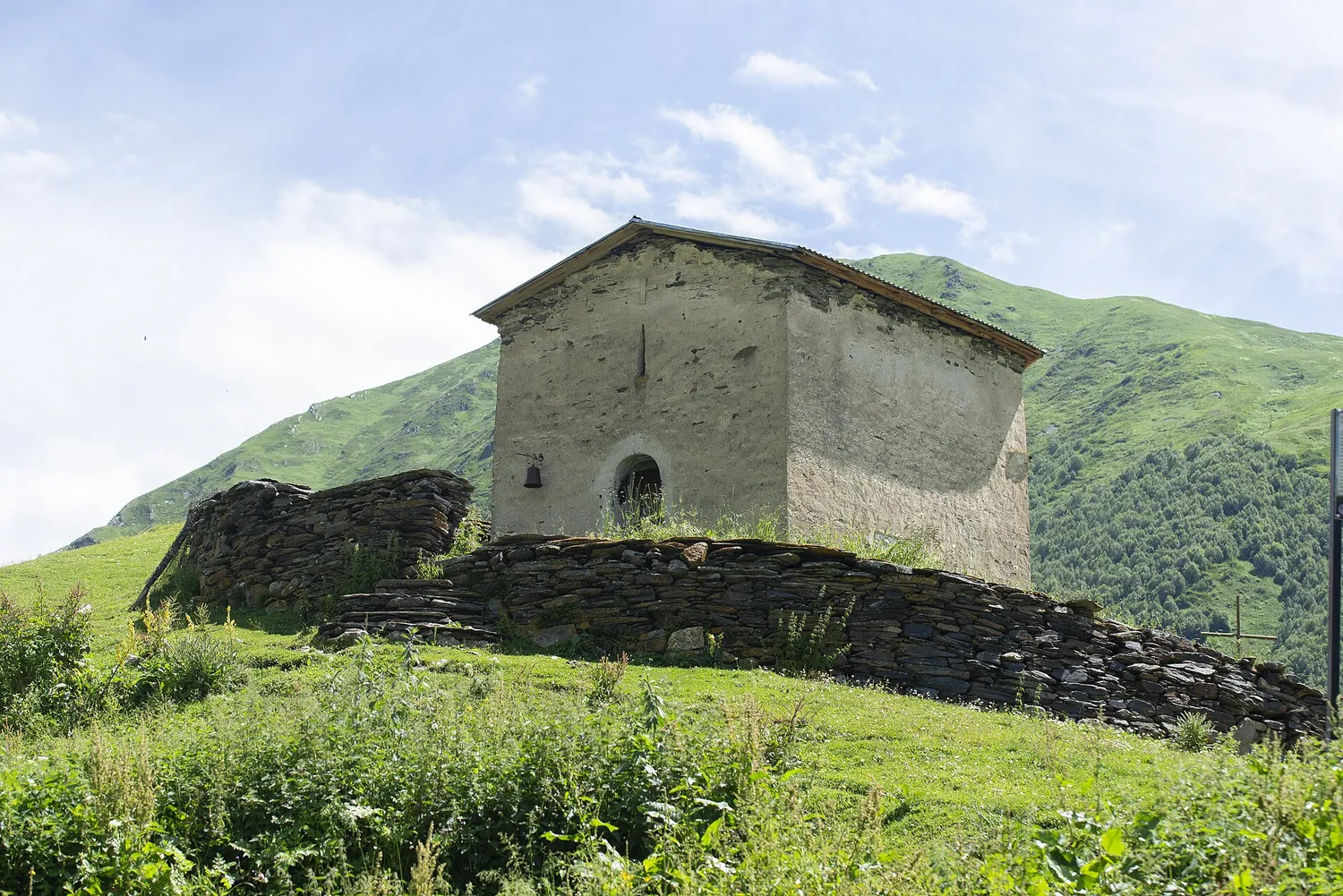
Higher up, in Ushguli, the church of St George in the village of Zhibiani, also called Jgrag, stands a short walk from the better known church of Lamaria, beneath Shkhara, Georgia's highest peak. We describe Ushguli and how to visit it in our guide to choosing between Mestia and Ushguli.
For travellersShould you plan a trip around Giorgoba?
Honestly, it depends on what you want from Georgia.
For Tbilisi, Mtskheta and the table, yes. Late November is quiet, the cities are walkable, the wine is new, and being in Georgia on a feast day tells you more about the country than a museum can. A few days in the capital with a day trip to Mtskheta fits the date well.
For walking in Svaneti, no. By late November the high villages are cold, snow can arrive at any time, and the walking routes we use are a May to October affair. You can still travel to Mestia in winter, but that is a different trip and we would design it as one.
If the saint is what draws you, the gentler answer is to come for the walking season and see his churches and icons on the way. Our next Warm Svaneti week is in May 2027, and you can see what eight days in the mountains look like in our day-by-day account.
If you would rather be there for Giorgoba itself, or for Christmas on 7 January, tell us your dates on our bespoke trip page and we will plan around them.
Georgia on its feast days
Tbilisi, Mtskheta and the Georgian table in the quiet season, or Svaneti's churches and villages from May to October. Designed and managed by Justvia Bespoke Travel, working with carefully selected local guides, drivers and operating partners.
Plan a trip around your dates How to reach Svaneti from the UKQuestionsWhat travellers ask about Giorgoba
When is Giorgoba in 2026?
Giorgoba, St George's Day in Georgia, is on Monday 23 November 2026. It is a public holiday, so offices and banks are closed and many Georgians have a long weekend. The date is the same every year.
Why does Georgia celebrate St George twice?
The Georgian Orthodox Church keeps two feasts of St George. The one on 6 May corresponds to 23 April in the old Julian calendar, the date England also uses. The one on 23 November is a distinctly Georgian tradition: church tradition says it was instituted by St Nino and remembers the saint's martyrdom on the wheel. Only the November feast is a public holiday.
What do you say to someone on Giorgoba?
The usual greeting is "Gilotsavt Giorgobas!", which means "Happy Giorgoba". If you know someone called Giorgi, it is also his name day, so a greeting to him is especially welcome.
Is Georgia worth visiting in late November?
For Tbilisi, Mtskheta, food and wine, yes: it is quiet, mild in the lowlands and you may catch a feast day. For mountain walking in Svaneti, no: by late November the high villages are cold and snow is possible, and walking routes there are best from May to October.
What is Jgrag in Svaneti?
Jgrag is the Svan name for St George. Several churches in Svaneti are known by it, including the church of St George at Nakipari, with frescoes painted in 1130, and the church of St George in Zhibiani, one of the villages of Ushguli.
Jurijs Ovcinnikovs, founder of Justvia Bespoke Travel, a UK travel agency running small-group and bespoke journeys to Georgia. Every journey is designed and managed by Justvia, working with carefully selected local guides, drivers and operating partners.
About Justvia
Justvia is a UK travel agency specialising in bespoke and small-group journeys to Georgia. Its tours are designed for English-speaking travellers who value genuine experience over mass tourism. Cover photo: Mtskheta and Svetitskhoveli Cathedral by Dmitry A. Mottl, CC BY-SA 4.0, via Wikimedia Commons.
Editorial strategy and digital production by MariCleo Studio.