
The Adishi River Crossing, Honestly
One river crossing has produced more nervous questions about the Mestia to Ushguli trek than every pass and ridge combined. Here is what the Adishchala actually asks of you, and how to answer it sensibly.
 By Jurijs Ovcinnikovs · Founder, Justvia Bespoke Travel · 30 July 2026
Every long walk has one moment that grows in the telling. On the classic Mestia to Ushguli trek in Svaneti, in Georgia's high Caucasus, that moment is a braided grey river below the Adishi glacier called the Adishchala. Ask in any guesthouse in Mestia and you will hear it described as everything from a paddle to an ordeal. Both descriptions are true. They are just true on different mornings.
This article is the honest version. It will not tell you the crossing is nothing, because cold glacial water moving over loose stone is never nothing. It also will not dramatise it, because for much of the season this is a crossing walkers make and remember fondly, wet to the knee and laughing about it by lunchtime. What it will do is explain why the river changes so much, how to read it on the day, when the horse is the right answer, and when the right answer is to wait.
The crossingWhat the crossing actually is
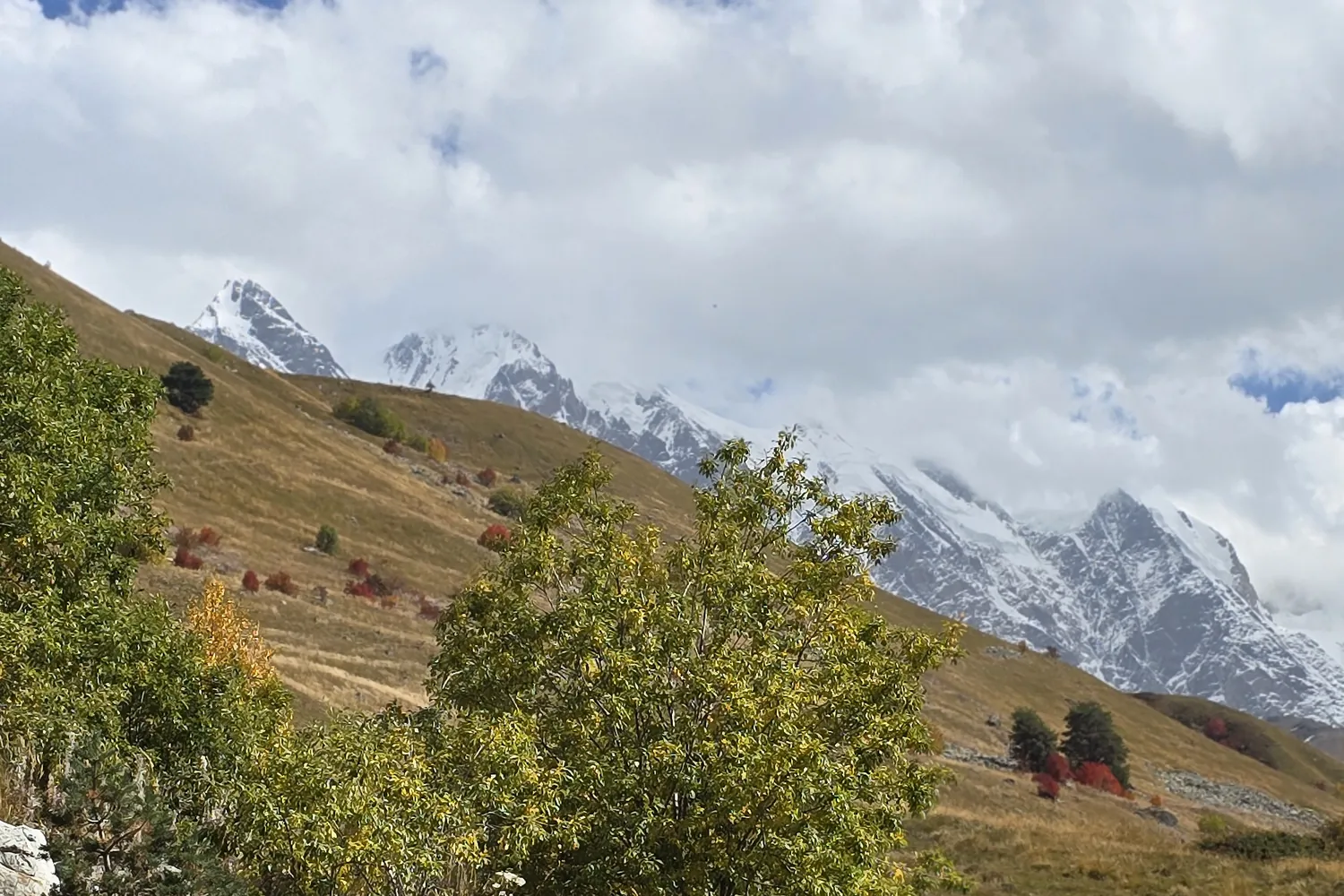
The Adishchala drains the Adishi glacier, which hangs off the wall of peaks above the village of Adishi. You meet the river on the third stage of the classic traverse, the day that takes you from Adishi over the Chkhutnieri pass towards Iprali. The crossing comes early in that day, which matters more than it sounds: you arrive with cold legs and a full pack, not warmed up and empty.
It is not a single channel. Glacial rivers braid, splitting into several strands across a wide bed of grey stone, and the Adishchala moves its strands around from year to year. This is good news. A braided river gives you choices, and the wide, shallow-looking option is almost always wiser than the short, narrow, fast one.
The water itself is glacial meltwater, which means two things. It is genuinely cold, cold enough to make your feet clumsy within a minute. And it is opaque, the colour of wet cement, so you cannot see the bottom. You place your feet by feel, which is why technique and poles matter more here than anywhere else on the route.
ConditionsWhy the river is a different river every day
The Adishchala is fed by melting ice, so its volume follows the melt. That produces three rhythms worth understanding before you go.
The season. In late spring and early summer the glacier is melting hard and the river runs high. By September the melt has slowed and the river is at its most reasonable. This is one reason experienced walkers favour early autumn in Svaneti, and it is the season our own guests see the valleys in.
The weather. A hot, sunny afternoon accelerates the melt. A day of heavy rain adds water directly. Either one can turn yesterday's easy crossing into today's problem, which is why last week's trip report, however recent, is not a promise.
The hour. The river is lowest in the morning, before the day's sun has worked on the ice, and rises through the afternoon. Walkers who leave Adishi early cross a smaller river than walkers who linger over breakfast. If one practical sentence from this article stays with you, let it be that one: cross early.
None of this makes the crossing predictable. River conditions vary by season, weather and time of day, and the only reading that counts is the one you take standing on the bank. Check locally the evening before, in Adishi itself, where the families watch this river all year.
The horseThe horse, and why there is no shame in it
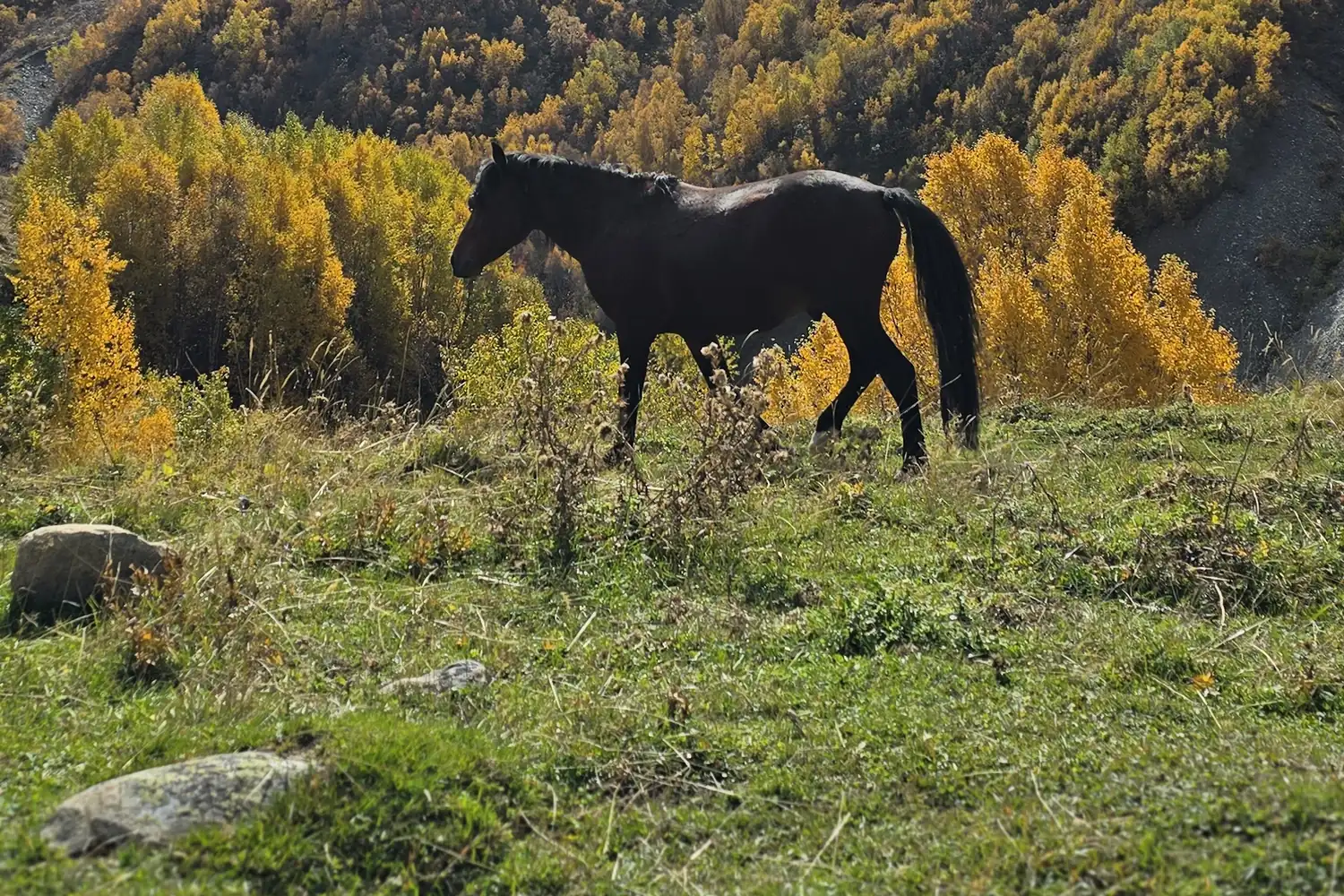
For much of the season, families from Adishi bring horses to the crossing in the morning and carry walkers over for a small fee. Recent walkers have reported paying around 20 to 25 lari. Availability and price should be confirmed on the day, in cash, and neither is guaranteed: the horses are there when the demand and the river both justify it, not by timetable.
Take the horse without embarrassment if the water is high, if you are carrying a heavy pack on the traverse, if you are travelling alone, or if you simply do not fancy it. A horse that lives beside this river reads it better than any of us. Some of the strongest walkers we know take the horse on principle in June and cross on foot in September. That is not caution. That is judgement.
TechniqueCrossing on foot, done properly
If the morning is right and the river is in a reasonable mood, crossing on foot is a memorable few minutes rather than a trial. A few rules carry most of the safety.
- Choose width over speed. Walk the bank and pick the widest, most braided section, even if it means several channels. Fast narrow water is the enemy, not distance.
- Keep your feet protected. Bare feet on invisible, shifting stones is how ankles get hurt. Sandals or an old pair of trainers carried for the purpose work well. Boots stay dry in the pack.
- Unclip your hip belt and chest strap. If you go down, the pack must come off, not hold you under.
- Use poles, face upstream, move one point at a time. Two feet and a pole planted while the other pole probes. Short shuffling steps, never crossing your legs.
- Cross one at a time, or link arms deliberately. Half-linked groups are worse than either.
- Have dry socks and a warm layer ready on the far bank. The cold arrives properly once you stop.
And the rule above all the others: do not force it. If the water is pushing at your thighs, if the far bank feels far, if something in you says no, listen. If the crossing looks unsafe, turn back and seek current local advice rather than forcing it. A day lost to a river is a story. The alternative is not.
DepthHow deep is it, then
This is the question everyone asks, and the honest answer is the only useful one: nobody can tell you in advance, and you should be suspicious of anyone who does. Depth changes by strand, by hour and by season, and the same crossing point can be a different proposition in June and in September. Judge it on the morning, with your own eyes, with local advice from Adishi, and with the horse standing there as a perfectly good plan B.
With usWhere this fits in a Svaneti trip
A note on how we approach this at Justvia, so the context is clear. On our vehicle-supported Svaneti itinerary, built around village stays and selected day walks, we do not cross the Adishchala at all, and we drive into Ushguli, which is how our guests stand under Shkhara without carrying their lives on their backs. The full four-day traverse, river and all, is something we arrange as a bespoke trip for walkers who want it, with the route built around the season.
If you are weighing the two approaches, the full picture, including our own walking days with their real distances, is in our guide to the Mestia to Ushguli trek. And if you are deciding whether the traverse is your kind of walking at all, that guide's honest comparison of the published figures is the place to start.
Svaneti without the river crossing
Eight days in the high Caucasus, walked from family guesthouses at an easy pace, with Ushguli and the Shkhara valley reached the comfortable way. Led by Mari, who is from Svaneti.
See the Warm Svaneti trip Build a bespoke traverseQuestionsWhat people ask
Is the Adishi river crossing dangerous?
It needs respect rather than fear. The Adishchala is cold, opaque glacial water over loose stone, and it changes with season, weather and time of day. Crossed early in the morning, at a wide braided section, with poles and an unclipped hip belt, it is a normal part of the trek. Fitness alone does not determine whether the crossing is safe: conditions on the day do. If it looks wrong, take the horse or turn back and seek current local advice. Do not force a crossing that feels unsafe.
How much does the horse crossing at Adishi cost?
Families from Adishi bring horses to the crossing in the morning for much of the season, and recent walkers report paying around 20 to 25 lari in cash. Availability and price are not guaranteed and should be confirmed on the day, either in Adishi the evening before or at the river itself.
What time of day is best to cross the Adishchala?
Morning, as early as you can manage. The river is fed by glacial melt, so it is lowest before the sun has worked on the ice and rises through the afternoon. Leaving Adishi early means crossing a smaller river.
How deep is the Adishi river crossing?
There is no honest fixed answer. Depth varies by channel, by hour and by season, and the same point can be a very different proposition on a September morning and in June. Judge it on the day with local advice from Adishi, and treat the horse as a perfectly good alternative rather than a defeat.
Can you do the Mestia to Ushguli trek without crossing the river?
Yes, in two ways. Day walkers and vehicle-supported itineraries reach Ushguli by road, which is how our own Svaneti trips work. On the traverse itself, the crossing belongs to the Adishi to Iprali stage, so route variations that skip that stage also skip the river, at the cost of missing some of the finest scenery. The comparison is covered in our Mestia to Ushguli guide.
Jurijs Ovcinnikovs, founder of Justvia Bespoke Travel, a UK travel agency running small-group and bespoke journeys to Georgia. Every journey is designed and managed by Justvia, working with carefully selected local guides, drivers and operating partners. The local Svaneti context in this article was reviewed by Mari, our Svaneti-born guide.
About Justvia
Justvia is a UK travel agency specialising in bespoke and small-group journeys to Georgia and the Caucasus. Local Svaneti context for this article was reviewed by Mari, our Svaneti-born guide.
Editorial strategy and digital production by MariCleo Studio.
More from the Journal
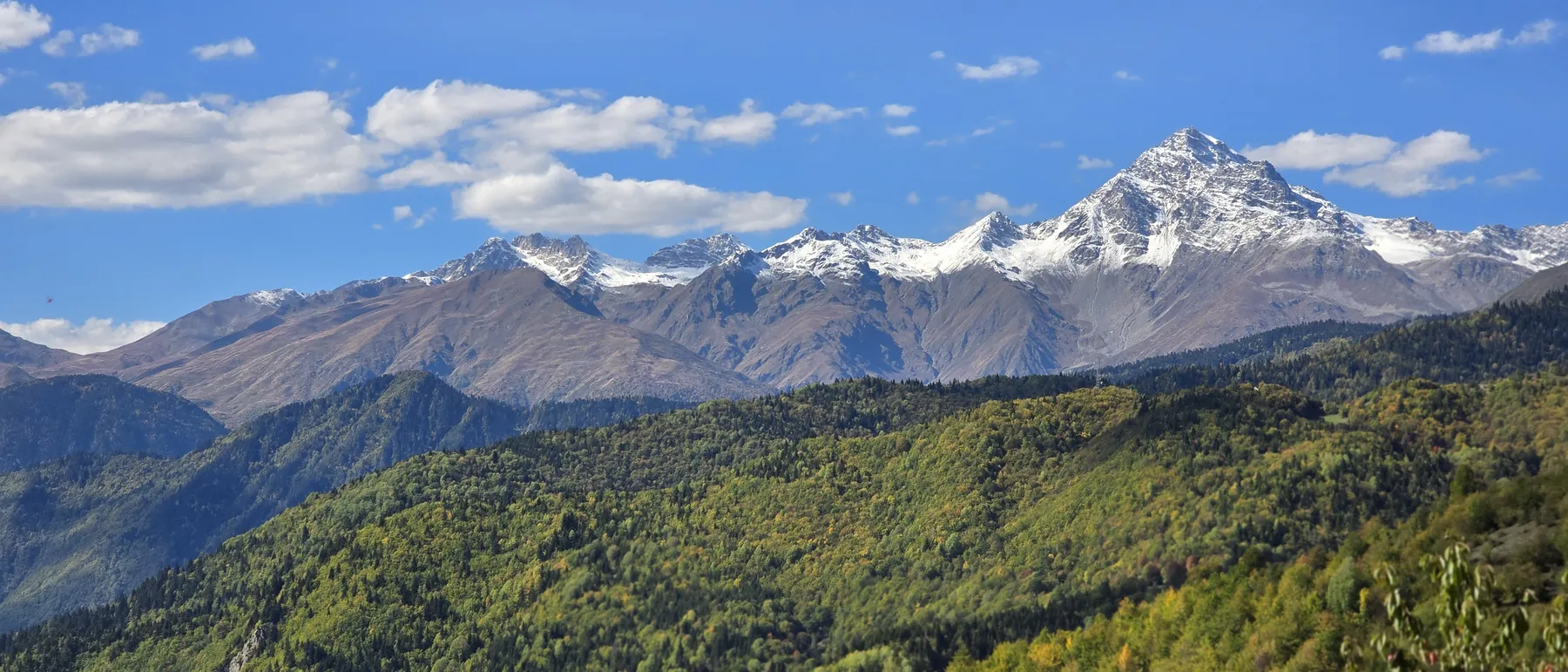
Mestia to Ushguli: The Classic Trek
What the four-day traverse actually involves, and the flexible alternative.
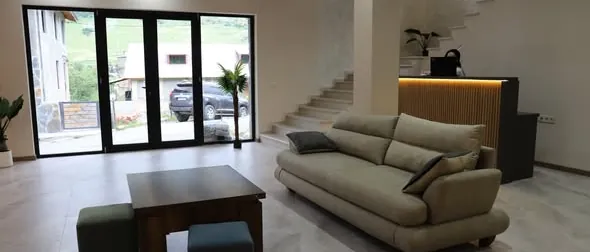
A Night in a Svaneti Guesthouse
The room, the table and the morning, described honestly.
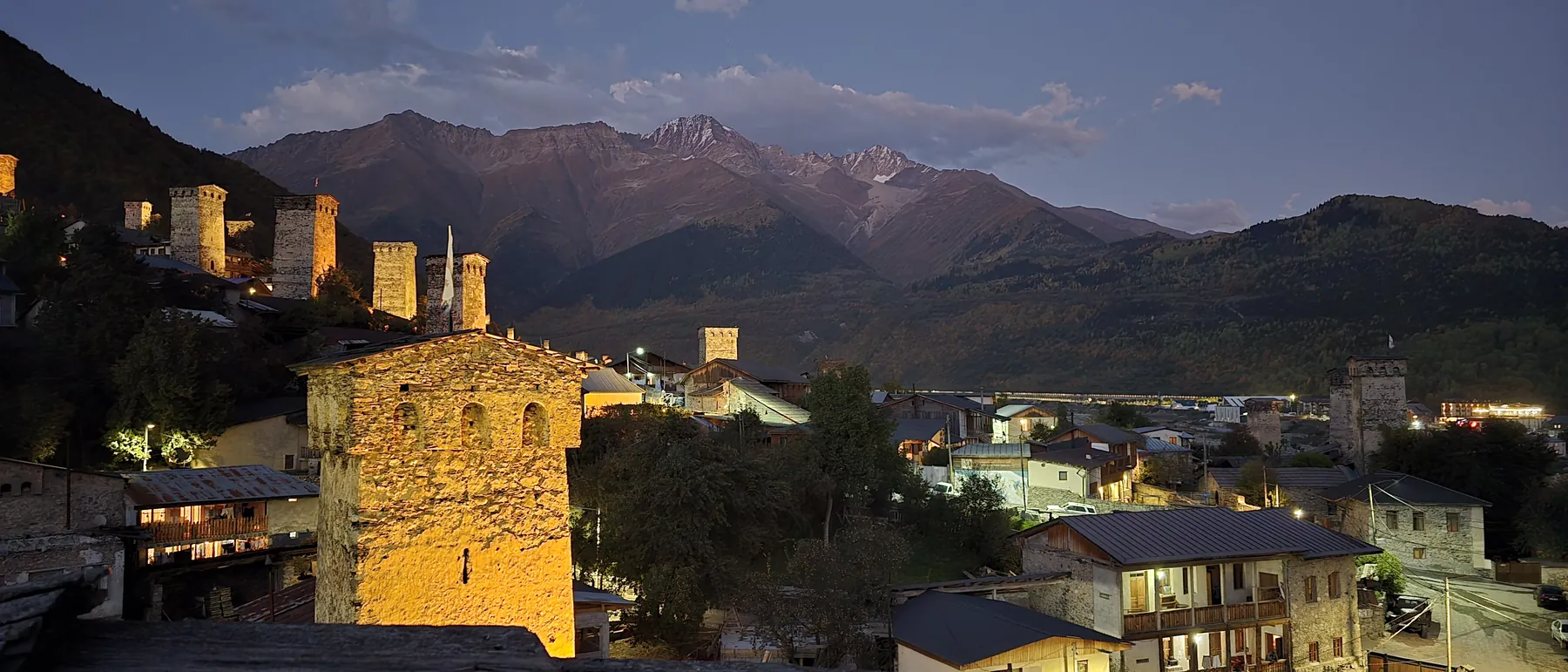
Mestia or Ushguli: Where to Base Yourself
Town with cash machines, or towers under Shkhara. How to choose.
