
Mestia to Ushguli: The Classic Trek and a More Flexible Way to Walk Svaneti
What the four-day traverse actually involves, why published route figures refuse to agree with each other, and how to tell which style of Svaneti week is yours
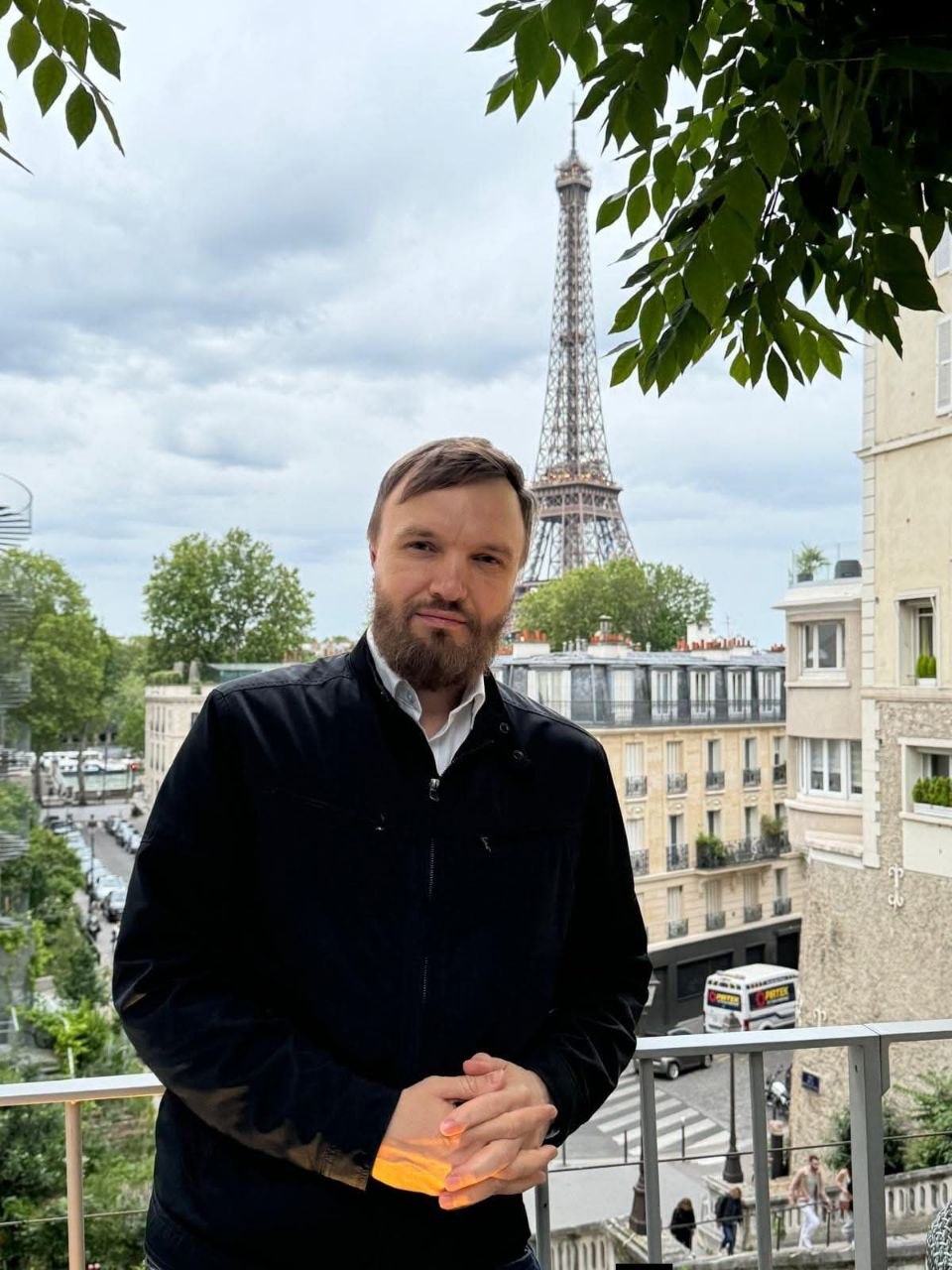 By Jurijs Ovcinnikovs · Founder, Justvia Bespoke Travel · 30 July 2026
The Mestia to Ushguli trek is the best-known multi-day walk in Svaneti, in Georgia's high Caucasus. Over three or four days you travel east from Mestia through mountain villages, sleep in family guesthouses, and finish beneath the medieval towers of Ushguli.
That sounds straightforward until you start planning it.
One guide sends you through Zhabeshi. Another replaces Zhabeshi with Tsvirmi. Daily distances change, ascent figures refuse to agree, and even the walk into Ushguli has more than one version. That does not mean one source is wrong. It usually means they are describing different lines across the same landscape.
So the useful question is not “how many kilometres is the Mestia to Ushguli trek”. It is this: do you want the continuous four-day traverse itself, or do you want Svaneti's mountains, villages and guesthouses with more room to adapt the walking as the week goes?
For some walkers, reaching Ushguli on foot is the whole point. For others, the line on the map matters less than the quality of the days around it. Both are good answers. This page exists to help you find out which one is yours, before you have booked anything.
The routeWhat the classic trek involves
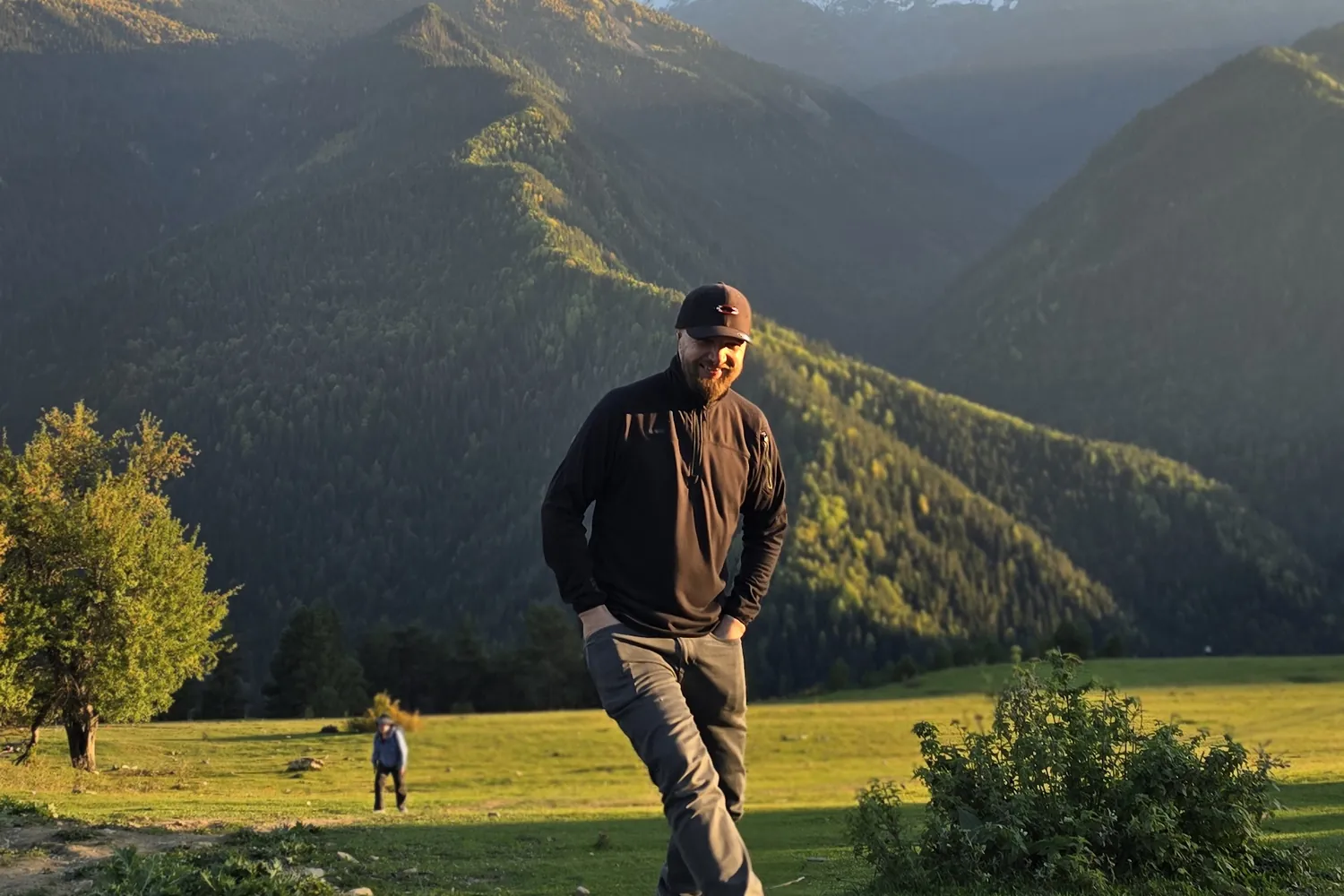
The standard version is usually described as four days, village to village: Mestia to Zhabeshi, Zhabeshi to Adishi, Adishi to Iprali, then Iprali to Ushguli.
You sleep in village guesthouses rather than mountain huts. It works rather like hut-to-hut walking in the Alps, except that in this corner of Georgia the accommodation sits inside inhabited Svan communities, usually with dinner and breakfast cooked by the family running the house.
The third day is normally the most involved. The route leaves Adishi, fords the glacier-fed Adishchala river and climbs towards the pass before dropping towards Iprali. Both published guides we read describe the same two options at the water: wade it, or hire a horse from a local family. One quotes 20 lari per person, the other 25 lari and sometimes more. The water is cold enough that both of them mention it.
The numbersWhy published route figures vary
Figures look objective. A kilometre is a kilometre. Mountains are less obedient. Here are two respected route guides describing the same trek.
| Guide A, via Zhabeshi | Guide B, via Tsvirmi | |
|---|---|---|
| Total distance | 56.9 km | 33.75 miles, about 54 km |
| Total ascent | 3,106 m | 8,264 ft, about 2,519 m |
| Highest point | 2,737 m | 8,999 ft, about 2,743 m |
| Day 1 | Mestia to Zhabeshi, 16.1 km, 763 m of ascent | Mestia to Tsvirmi, 6 miles, 5 to 7 hours |
| First night | Zhabeshi, or Chvabiani | Tsvirmi |
| How you start | on foot from Mestia’s main square | by cable car up to Zuruldi |
| River crossing | ford it, or a horse from 25 lari | ford it, or a horse at 20 lari |
Figures as published by each guide, read 30 July 2026. These are their measurements, not ours.
Look at what actually differs. One counts in kilometres and metres, the other in miles and feet, so the same mountain reads differently before you have even left the page. One walks out of Mestia; the other takes the cable car and starts higher, which quietly removes a chunk of the first day's climb. One spends the first night in Zhabeshi, the other in Tsvirmi. The totals end up roughly three kilometres apart, the ascent figures nearly six hundred metres apart, and both are honest.
The practical lesson is not to ignore published figures. It is to ask what each figure describes. Before you trust any itinerary, check:
- the exact village you sleep in each night;
- the starting point used for each day, and whether a lift or a vehicle is involved;
- where the fourth day finishes;
- the date and the source of the GPS track;
- whether the timings assume an early start, settled weather and a steady pace.
A tidy table cannot make two different routes into one route. If a page gives you numbers without telling you which line they describe, the numbers are decoration.
HonestlyWhat the continuous traverse asks of you
The traverse is a real and rewarding thing to do, and plenty of people walk it independently and love it. It is worth being clear about what it asks in return.
You change accommodation every night, so you commit to a line across the mountains several days in advance. Through the guesthouse system you carry your personal kit for the full three or four days, but not camping equipment, bedding or most meals, which is one reason the route is so popular. What you give up is room to move: if the weather turns, if someone is tired, or if a stage needs shortening, the itinerary has already decided where you sleep tonight.
In exchange you get something a flexible week cannot give you, and it is not a small thing: a genuine sense of progression. You walk out of one valley and into the next, and Ushguli arrives as an ending rather than an outing. If that is what you came for, take it. Nothing below is an argument against it.
The riverThe Adishchala crossing, by season
The one fixed obstacle on the traverse is the ford of the Adishchala on day three, and it is not the same river in June as it is in September.
The Adishchala is fed by the Adishi glacier, so it behaves like glacier rivers everywhere: highest in early summer, when snowmelt is at its peak, lower by September, when the melt has slackened. It also rises through the day as the sun works on the ice above, which is why glacier-fed rivers are crossed in the morning where there is a choice.
None of this makes the crossing trivial in any month. River conditions vary by season, weather and time of day. Check locally before crossing, start early where possible, and do not force the crossing if it looks unsafe. A horse may be available from local families, but availability and price should be confirmed on the day.
The alternativeAnother way to walk Svaneti
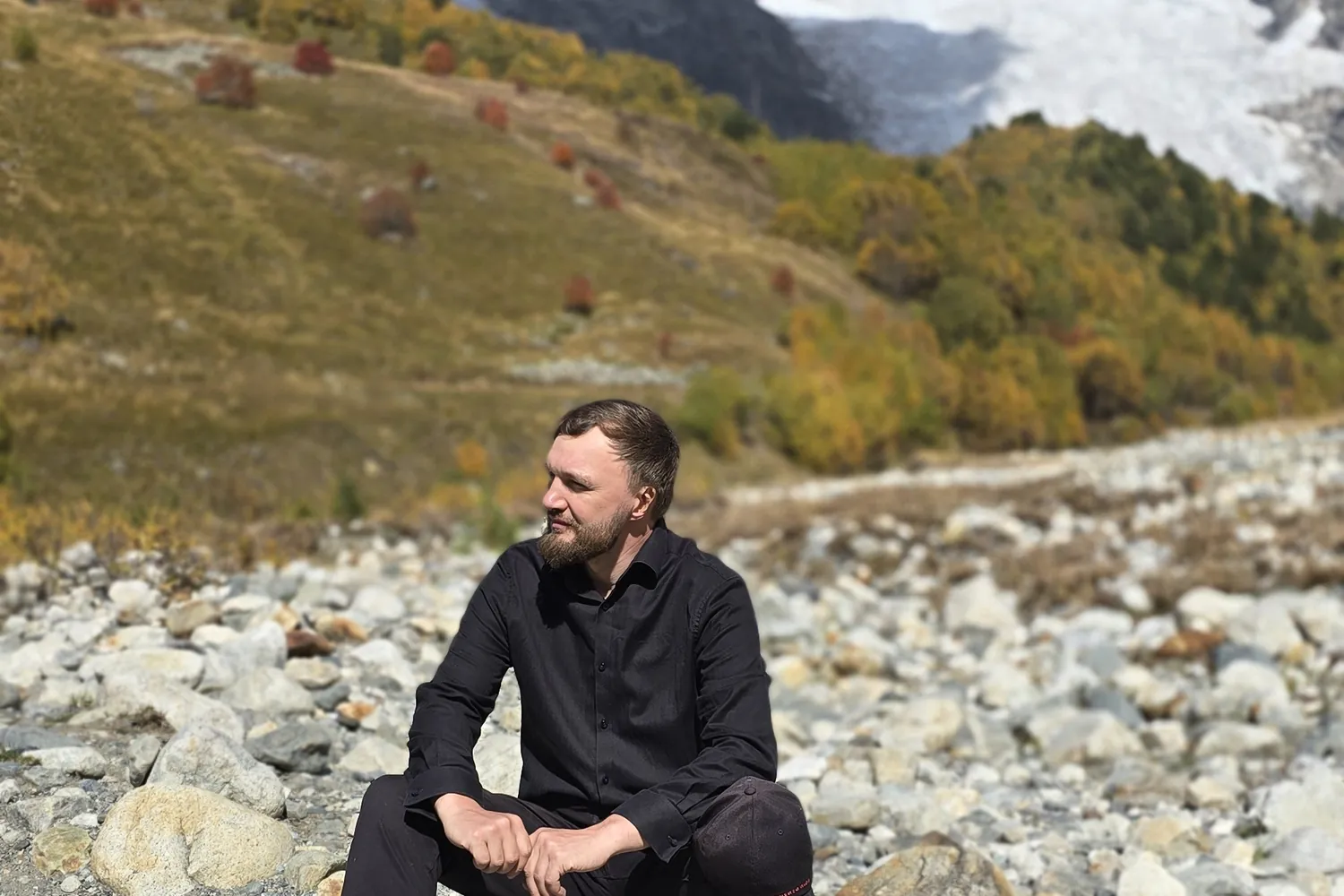
Our own week is built differently, and the difference is worth stating plainly. Warm Svaneti runs from Kutaisi up to Mestia, then Etseri, Mazeri and Ushguli, and back through Mestia. Village stays, road transfers between valleys, and mountain days that are real mountain days:
- Etseri to Mazeri. A gentler opening: forest paths under tall pines, glacial streams to cross, and the twin summit of Mount Ushba in view for most of the day.
- The Ushba glacier and the Shdugra waterfalls. The longest day of the week, roughly 14 to 16 kilometres there and back, around 500 to 700 metres of ascent, the highest point about 2,200 metres. It ends in a traditional Svan bathhouse, which is included, and which people remember longer than the climb.
- Ushguli. A walk towards the Shkhara glacier beneath Georgia's highest mountain, roughly 16 to 19 kilometres, around 600 metres of ascent, topping out near 2,400 metres.
Our figures are approximate and confirmed on enquiry, for the same reason the published ones vary: the exact line depends on the group and on the conditions of the day. A narrative companion to this page is A Week in Svaneti, Day by Day. Between the mountain days there is a slower day in Mestia, with the Svaneti Museum, the old towers, and time to do very little.
We drive to Ushguli. We do not walk the four-day traverse into it, and we would rather say so plainly than let a photograph imply otherwise. Three practical reasons. A group of up to eight is never uniform, and a fixed traverse punishes the difference every day. September weather changes faster than a schedule, and with transfers available a bad morning becomes a different walk instead of a worse one. And our guesthouses are chosen rather than allocated, because Mari knows the families who keep them. None of that makes our week better. It makes it a different answer to the same question.
DecidingWhich style suits you
The classic traverse, if the continuous line matters to you and arriving in Ushguli on foot is the point; you are comfortable with consecutive walking days and no rest day; the river crossing sounds like part of the story; you would rather be self-sufficient than have logistics handled; and you are travelling with people of similar pace.
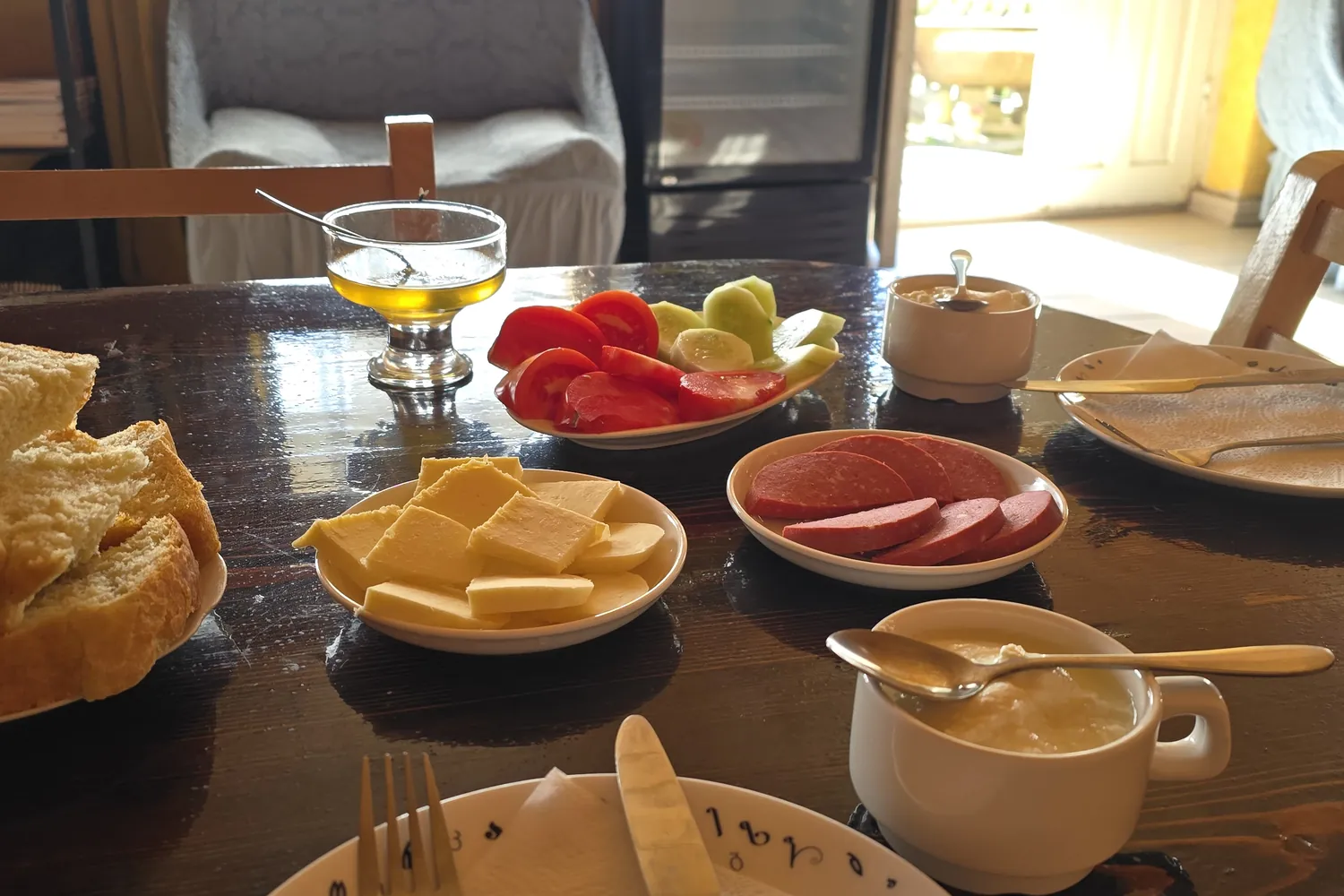
A flexible Svaneti week, if you want the mountains, the towers and the guesthouses but not necessarily a line on a map; your group has a range of fitness, or you are unsure of your own; you would rather one day was replaced than the trip compromised; you want the evening to be a long table rather than a search for a bed; and you would rather use a week well than complete it.
If you read both and still cannot tell, that is useful information: it usually means the walking is not the deciding factor, and the company and the pace are.
Due diligenceFive questions to ask before you book anything
Whether you are booking guesthouses yourself or talking to an operator, these five questions surface the problems while they are still cheap to fix.
- Which village will I sleep in each night, exactly? Not “the Adishi area”. The village determines the next day's distance, and it is the difference between two published itineraries agreeing and disagreeing.
- Is the house confirmed open for my dates, or “usually open”? Towards the end of September some houses begin closing for the season. “Usually” is fine in July and a gamble in October.
- What exactly does the price include? Dinner and breakfast are standard in Svan guesthouses; a packed lunch often is not. Ask, so that the first surprise of the trip is not at the table.
- If the river is high on the morning I cross, who arranges the horse? “There are usually horses” is true, and it is not the same as someone having agreed to be there.
- Whose GPS track are your daily figures from, and how old is it? As the table above shows, an honest answer to this one question explains most of the contradictions you will have read.
If someone cannot answer these five, they are reading from the same pages you are.
The packWhat to carry on a walking day
On a based week like ours, a day pack is enough. On the traverse you carry your full personal kit, and this list is what should stay at the top of it. A sensible day load for walking in Georgia's high valleys:
- water, 1.5 to 2 litres; you can refill in the villages;
- a waterproof jacket, even on a blue-sky morning, because the weather here does not consult the forecast;
- a warm layer; above 2,000 metres the wind is cold in any month;
- sun cream and a hat; altitude sun burns faster than seaside sun;
- cash in lari, small notes; the horse at the crossing, coffee in a village, none of it takes cards;
- footwear you can wade in, sandals or light trail shoes, if you are crossing the Adishchala on foot;
- a small blister kit and any personal medication;
- a power bank; charging happens in the evenings and signal is patchy between villages.
That is the whole list. If your day pack weighs more than five or six kilograms, something in it is probably a souvenir.
SeasonWhen to go, in both directions
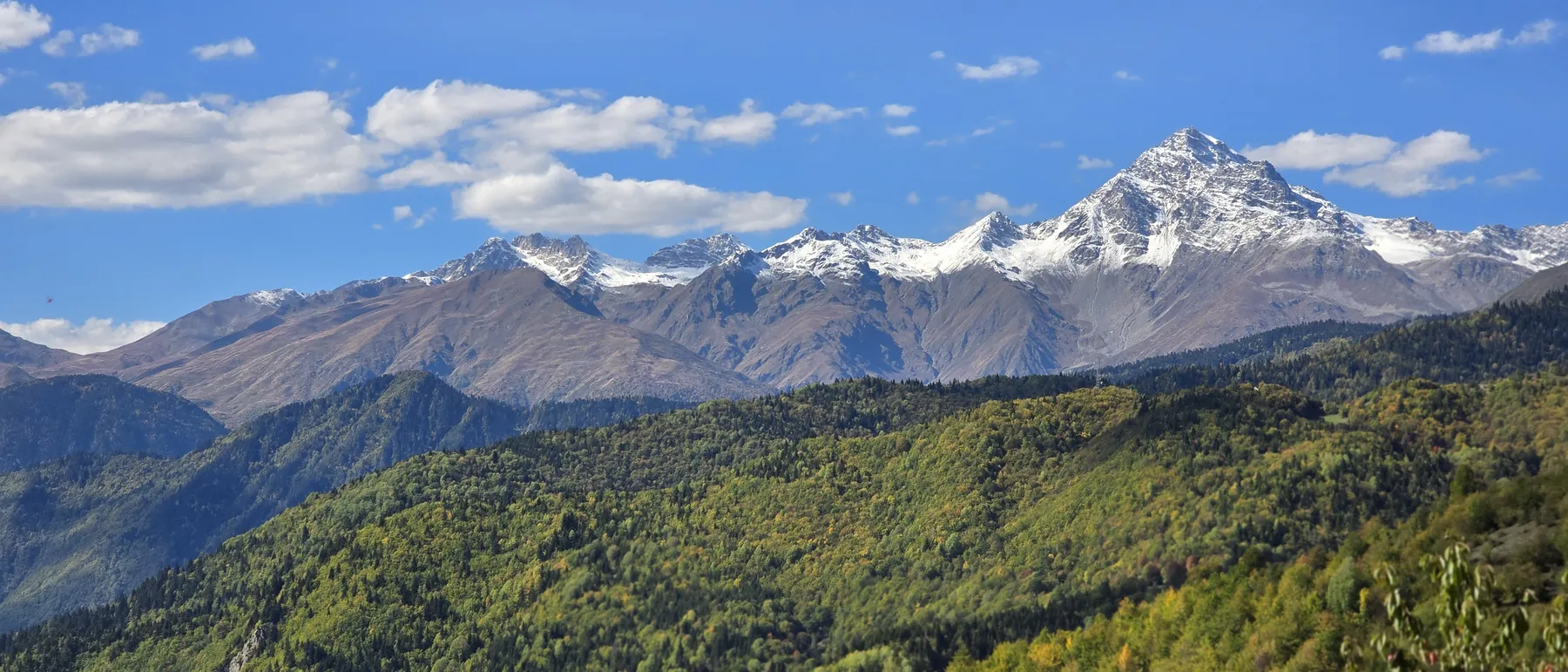
Late September in Svaneti is the window most people miss, and we are not neutral about it, so here are both halves. You gain the departure of the summer crowds, air cool enough to walk all day, colour in the valleys, an Adishchala running lower than in early summer, and afternoon light that does things to the towers July light does not. It costs you shorter daylight, so a late start eats a walking day; more variable weather; early snow on the high passes as a real possibility rather than a rumour, which matters more on a fixed traverse than on a flexible week; and some guesthouses beginning to close for the season.
LogisticsGetting to Mestia
Deciding where to sleep once you are there is its own question: Mestia or Ushguli, and what each base actually gives you.
Most British walkers fly to Kutaisi, in western Georgia, with one connection in Europe, then travel up into Upper Svaneti by road, around six hours with stops. There is also a small airport at Mestia with weather-dependent flights, and Tbilisi is a longer road option. The practical version, with example routings and transfer times, is in Getting to Svaneti.
With a guideWant to walk the full traverse?
We do not run the four-day traverse as a fixed departure. We can build it as a private guided walk, with Mari, guesthouses arranged in advance, and a plan for the river crossing and the weather. Tell us how many days you have and how you like to walk, and we will say honestly whether the traverse or a flexible week fits you better, including when the answer is that you should do it independently.
Prefer a more flexible Svaneti week
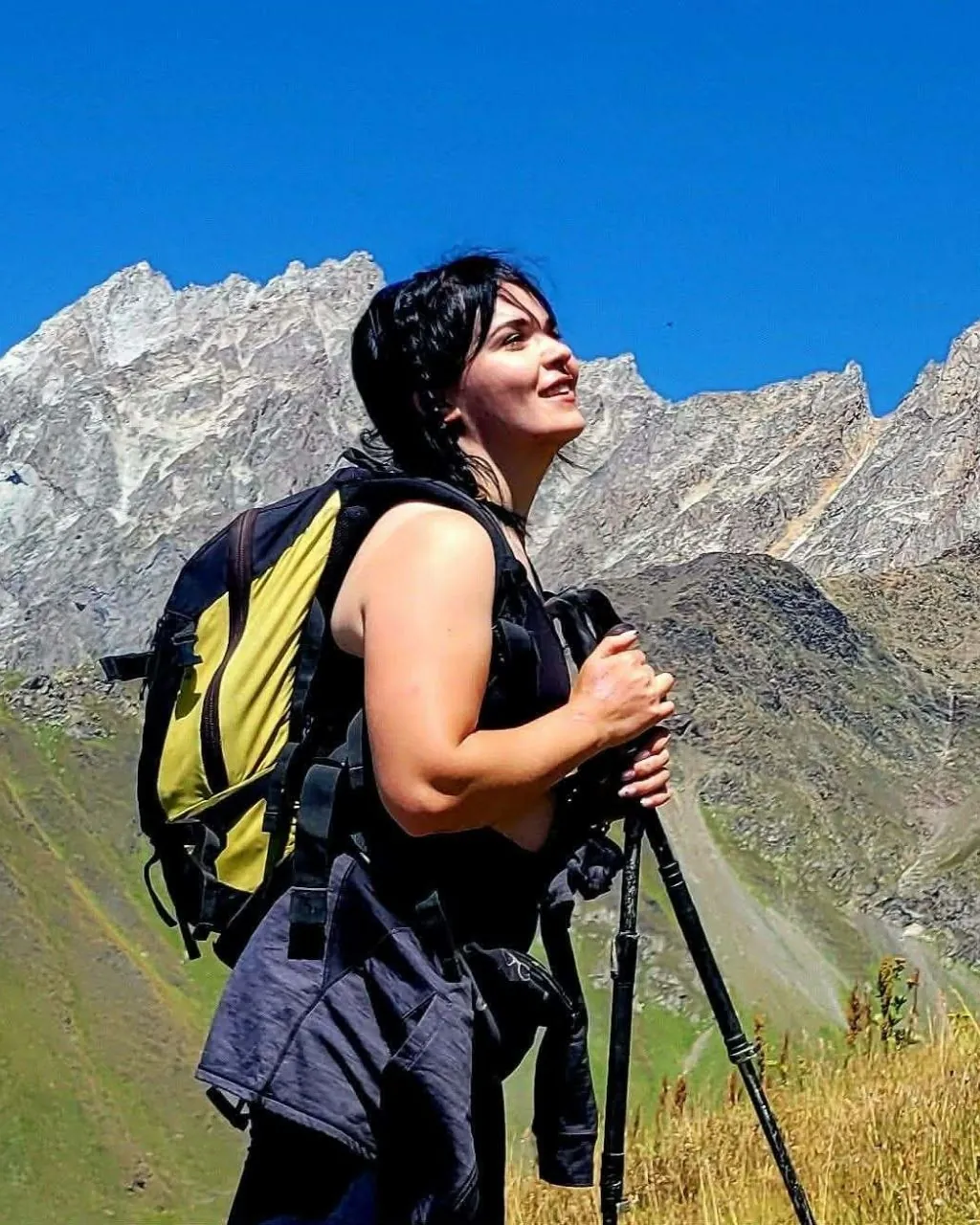
Warm Svaneti combines village stays, selected mountain walks and a day in Ushguli, in a small group, without committing everyone to the full four-day traverse.
Explore Warm Svaneti Plan a private Svaneti trekQuestionsWhat people ask
Is the Adishchala river crossing dangerous?
It is cold and it needs care rather than courage. Both published guides describe the same two options: wade it, or hire a horse from a local family, quoted by them at 20 to 25 lari per person and sometimes more; availability and price should be confirmed on the day. The river runs highest in early summer and lower by September, and rises through the day, so start early where you have the choice. This is one part of the route where recent local knowledge beats a downloaded track.
Can the Mestia to Ushguli trek be done in three days?
Published guides describe it as three to four days. Three means longer days and no margin if the weather interrupts you.
Do I need a permit to walk from Mestia to Ushguli?
No permit is required to walk in this part of Georgia. What you do need is travel insurance that covers mountain walking at the altitudes involved.
Is there phone signal on the trek?
Patchy, and better in the villages than between them. Treat it as a place where you are out of contact for parts of the day.
How do I get back from Ushguli?
Independently, most walkers take a marshrutka back to Mestia, and connections are frequent in season. On a private trip the return is arranged.
What about luggage on the Mestia to Ushguli trek?
On the traverse you carry your personal kit for the full traverse, while guesthouses provide beds and meals. Justvia does not offer a luggage transfer service, so if you are planning independently, plan to carry your own kit.
Jurijs Ovcinnikovs, founder of Justvia Bespoke Travel, a UK travel agency running small-group and bespoke journeys to Georgia. Every journey is designed and managed by Justvia, working with carefully selected local guides, drivers and operating partners. The local Svaneti context in this article was reviewed by Mari, our Svaneti-born guide.
About Justvia
Justvia is a UK travel agency specialising in bespoke and small-group journeys to Georgia and the Caucasus. Local Svaneti context for this article was reviewed by Mari, our Svaneti-born guide.
Editorial strategy and digital production by MariCleo Studio.
More from the Journal
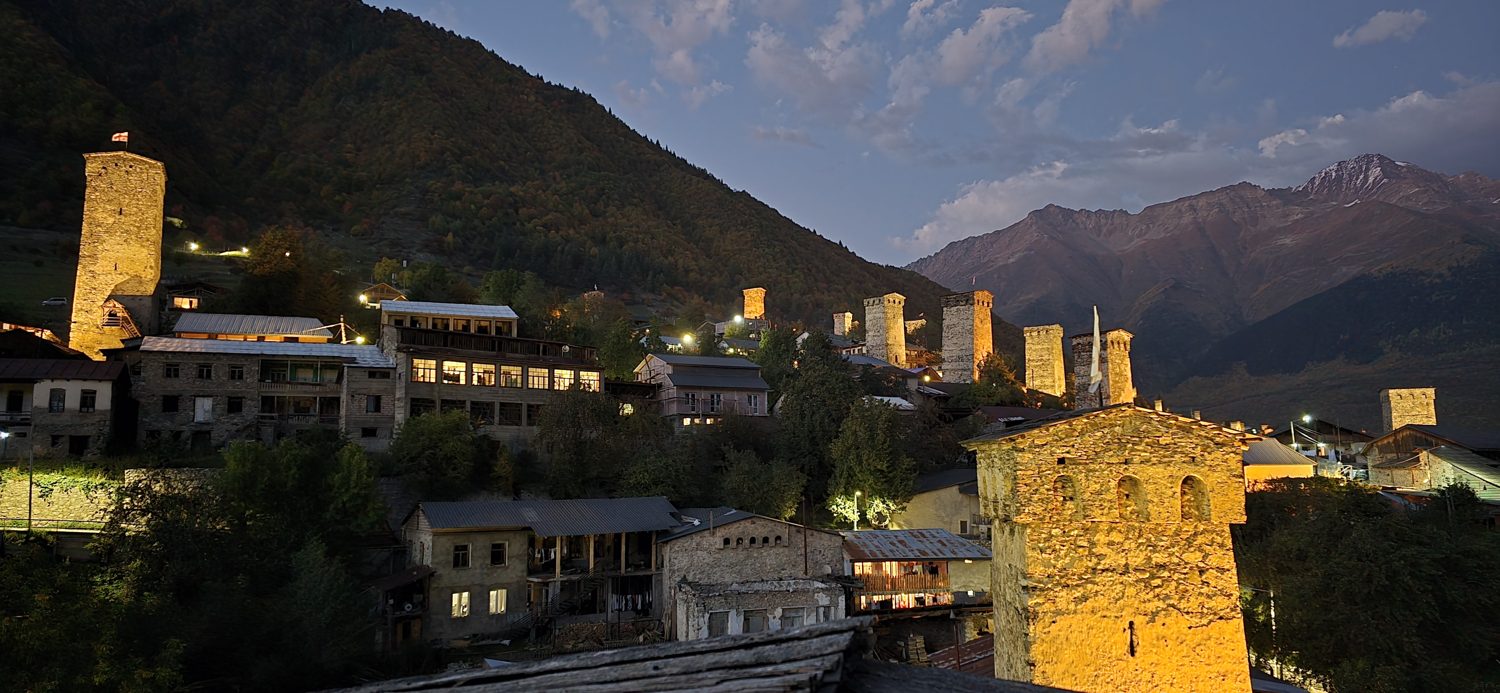
Walking in Georgia as a Solo Traveller
The full honest guide: safety, group life and the booking small print.
Walking Holidays with No Single Supplement
The five checks that stop you paying extra for an empty bed.
Why Svaneti in Autumn?
Why autumn may be the best season in the mountains.
