
Walking in Georgia With a Toddler: What to Check Before You Book
A family wrote to us about a village-to-village walk in Svaneti with a daughter who will be fourteen months old. Here is how we think that through, section by section, and the questions we would want answered by anyone, including us.
 By Jurijs Ovcinnikovs · Founder, Justvia Bespoke Travel · 21 September 2026
Every so often, an enquiry arrives that is really a design brief.
A family recently asked us how we would design a village-to-village walking trip in Svaneti with a fourteen-month-old travelling in a framed carrier on a parent's back. They had done this kind of walk before, elsewhere in Europe, and loved it. Now they wanted the same feeling with a child.
Three to five hours a day. Different guesthouses where that is safe. No river crossings, no scrambling, nothing exposed. Sensible altitude. Vehicle access built into the plan. And the freedom to change the day when the weather or the child says so.
This is not a request for a softer holiday. It is a request for a better-designed one.
So rather than answer it privately and leave the thinking in an inbox, we have written it up. What follows is not a claim that we have carried a hundred toddlers over Svaneti's passes. It is the method we would use to build this trip, and it applies to any operator you might ask, not only to us.
The short answerCan you do a village-to-village walk in Svaneti with a child under two?
Potentially, yes, if you accept that it will not be the classic four-day traverse and it will not be sold to you as one.
The classic Mestia to Ushguli trek is a genuine mountain route: four days of roughly five to seven hours, a high point of around 2,700 metres, and an unbridged glacial river below Adishi. We have written about that route honestly in our guide to the Mestia to Ushguli trek, and none of those features was designed with a fourteen-month-old in mind.
For us, that means starting again rather than simply shortening the adult trek.
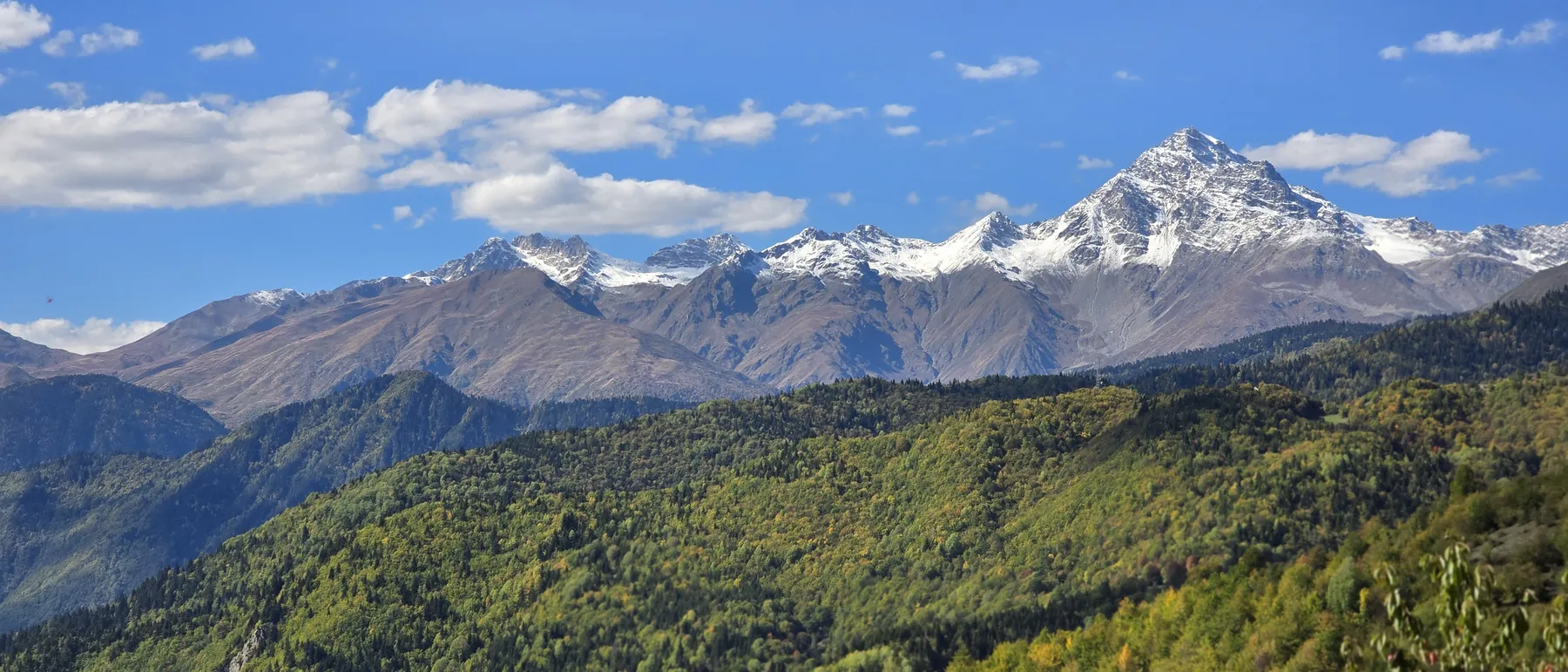
Svaneti still gives you the elements that make this kind of journey special: mountain villages, family-run guesthouses, valley walks and the possibility of moving on rather than returning to the same hotel each evening. But the walking sections have to be chosen individually, with road access, terrain, altitude and an exit plan checked before they go into the itinerary.
The shape of the journey can remain. The classic traverse does not have to.
What comes outWhich parts of Svaneti would we take out, and why?
Three things come out before anything goes in.
The Adishi river crossing. The Adishchala is cold, opaque glacial water over loose stone, and its conditions change with season, weather and time of day. We have described it in detail in our article on the Adishi crossing, and our own vehicle-supported itinerary does not cross it at all. With a child in a carrier, it is simply out.
The high ground on the classic traverse. The route reaches around 2,700 metres. The medical recommendations we discuss below are conservative for children under three, so we would not build a toddler itinerary around that high point.
Any section where the carrier needs to become an afterthought. A framed carrier changes balance and movement. The adult carrying the child is heavier and more top-heavy, and has less freedom to use both hands when the terrain becomes awkward. Narrow exposed ground, steep loose descents and anything we would normally describe as a scramble do not belong in this itinerary.
Some fine viewpoints disappear from the plan. Plenty of Svaneti remains.
AltitudeWhat does the altitude guidance say about a one-year-old?
The honest answer is that the evidence is limited and the recommendations are deliberately cautious.
A 2023 study published in Archives de Pédiatrie surveyed 104 doctors working in the French Alps. When asked about a single day at altitude, the median maximum they recommended was 1,600 metres at twelve months and 2,000 metres at twenty-four months.
That is useful information, but it is important to understand what it is. It was a survey of practitioners' recommendations, not a clinical threshold proving that one altitude is safe and another is unsafe.
A further French Delphi study published in 2025 brought together sixteen specialists. The resulting expert recommendations included a maximum altitude of 2,000 metres for children under one year and 2,500 metres for children under three, gradual ascent with stops every 500 metres, and careful monitoring of the child's reactions.
The UIAA medical commission also points out an obvious but important difficulty: very young children cannot reliably describe symptoms, while travel itself may alter sleep, appetite and behaviour.
None of these sources gives a precise evidence-based number for a healthy fourteen-month-old spending a particular number of hours or nights at altitude.
Put that against the map.
Mestia, at around 1,500 metres, sits below the figures discussed above. Ushguli is above 2,000 metres. For a family travelling with a fourteen-month-old, we would therefore start with nights lower in the valley and consider Ushguli separately rather than automatically including an overnight stay there.
And before fixing the itinerary, we would ask the parents to discuss the proposed sleeping and daytime altitudes with their own paediatrician.
We are guides, not doctors. Our job is to design conservatively around the medical advice, not reinterpret it.
The walking dayHow long should a walking day be when someone is carrying the child?
Shorter than the same parent might choose without the child, and shorter still at the beginning of the trip.
The child is only part of the load. Add the framed carrier, water, layers and everything needed during the day, and the adult is carrying significant weight high on the body for several hours.
So our starting point would be walking days of around three to four hours, with additional time available rather than scheduled. The first day would be the shortest, while everyone learns how the carrier, the child, the terrain and the altitude work together.
We would also build the rhythm around the child rather than the map.
There needs to be a proper break when she can come out of the carrier and move. Where possible, the walk should finish at the guesthouse rather than at a trailhead followed by another long transfer. And we would put a full rest day into the itinerary from the beginning, so using it never feels like losing a day.
Our week in Svaneti, day by day already shows why a slower day can be part of the trip rather than a gap in it.
The vehicleHow close does the vehicle need to be?
For a family with a toddler, the useful question is not "how remote can we get?" but "what happens if we decide to stop?"
Vehicle proximity therefore has to be a design condition, not an assumption.
Before putting any walking section into the itinerary, we would check where a vehicle can actually reach the family, where the nearest pickup point is, and what happens if the planned walk is shortened.
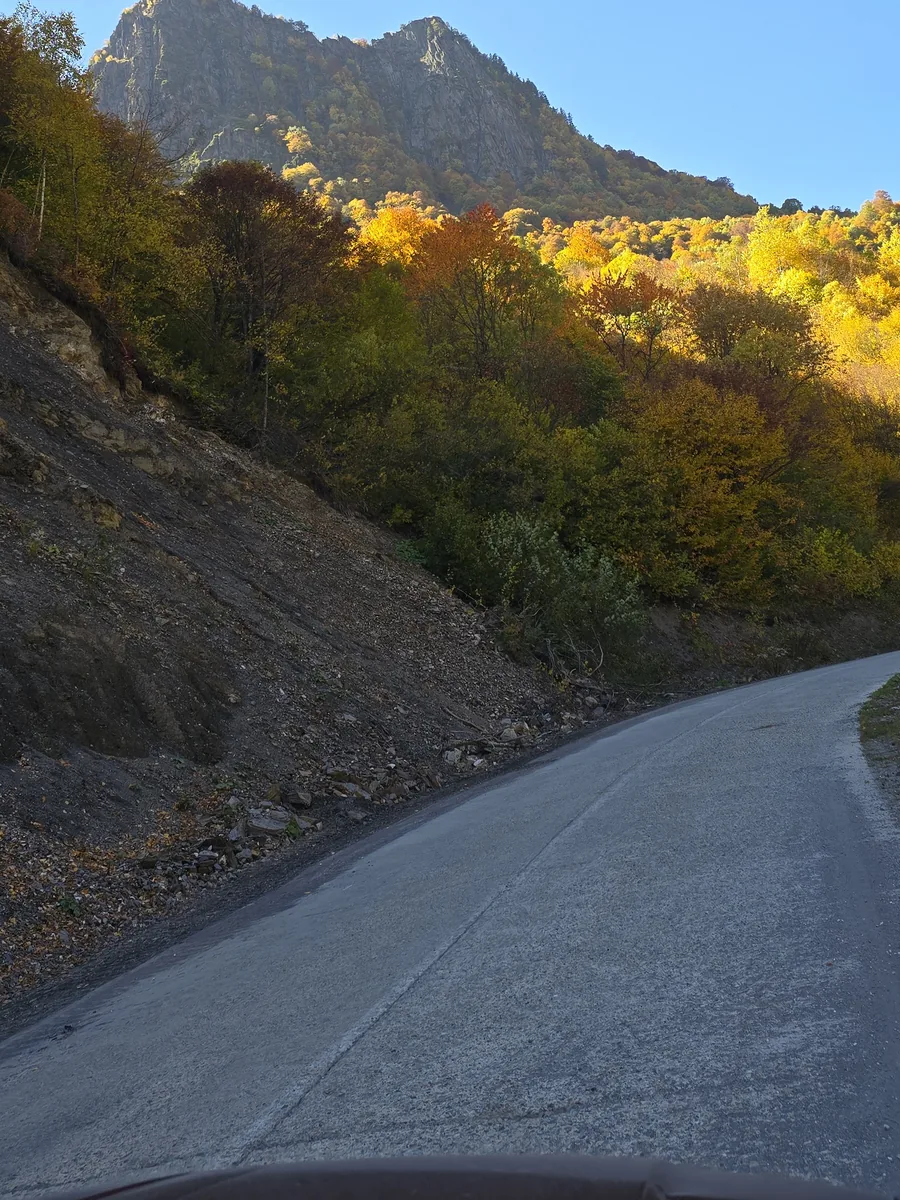
That matters in Svaneti because road access is not identical from village to village or path to path. A road visible on a map does not automatically mean that a minivan can reach the walker from every section of trail.
For this kind of trip, we would choose walks specifically because the exit plan works.
That is what makes flexibility real rather than a line in a brochure. If the weather changes or the child has had enough, the day needs an alternative that was considered before the family arrived.
The vehicle is part of the itinerary, not an emergency afterthought.
The nightsWhat should you check about a Svaneti guesthouse?
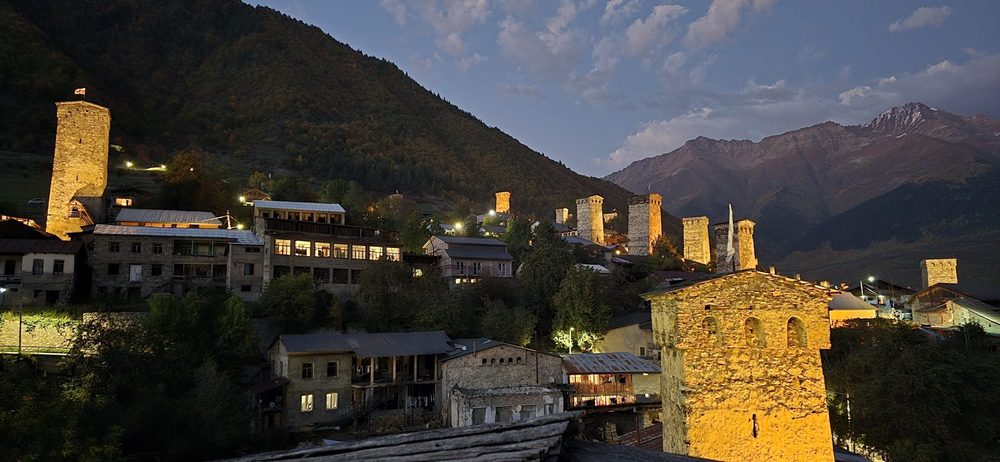
Family-run guesthouses are the backbone of walking trips in Svaneti. We have described what staying in one feels like in our guesthouse article.
With a toddler, however, atmosphere is not enough. Each night needs to be checked individually.
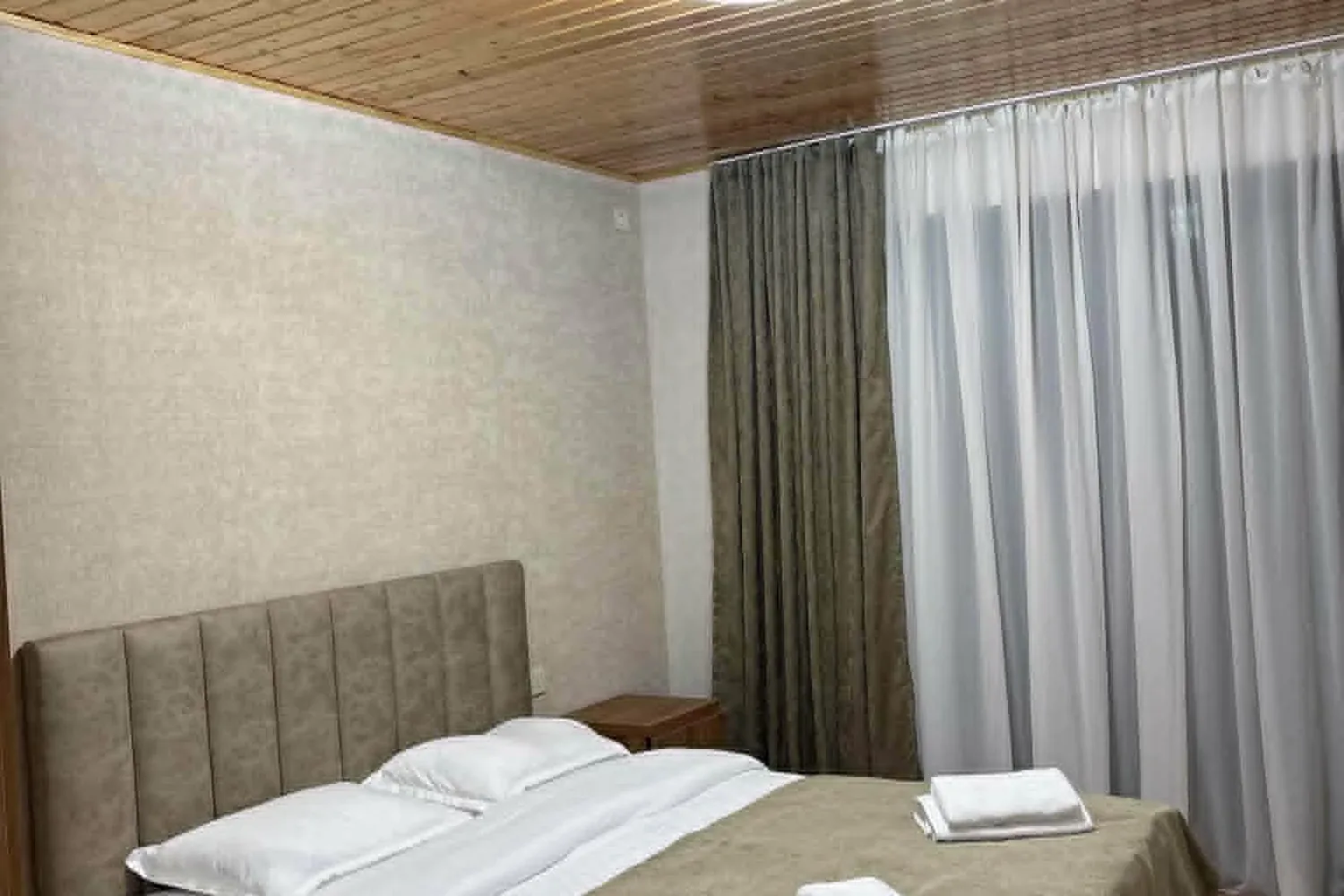
We would confirm a private room with enough space for the family's sleeping arrangement or travel cot, whether the bathroom is private or nearby, what hot-water arrangements are available, and whether the hosts are happy for parents to use the kitchen when the child's meal times do not match the household schedule.
That last question is easy to overlook and worth asking.
What should the family bring? The carrier they already know and trust, protection for sun and cold, clothing for a child who will spend long periods sitting rather than generating heat through walking, any paediatric supplies agreed with their doctor, and the food or comfort items the child genuinely depends on.
You can buy plenty in Georgia's towns. Choice becomes more limited once you move into the smaller mountain villages.
The checklistWhat should you ask any operator before you book?
This is the section we would most like you to take with you, whoever you eventually travel with. If an operator cannot answer these questions plainly, keep looking.
- Which sections of the usual route have you removed for a child this age, and why? The answer should name places. "We'll keep it gentle" is not an answer.
- What is the highest point of every walking day and every overnight stop? Ask for metres, day by day, and discuss those numbers with your child's doctor.
- Where exactly can the vehicle reach us on each walking day? Ask for the pickup points and the walking time to them.
- What happens if we decide to stop halfway through the walk? There should be an answer for every day, not only for the itinerary as a whole.
- Are there any river crossings, ladders, fixed cables, scrambling or exposed sections anywhere on the route? For this trip, our answer would need to be no.
- Who is the guide, and what communication is available on the actual walking sections? Mobile coverage in Mestia tells you very little about a path several valleys away.
- What are the sleeping arrangements for the child in each guesthouse? Confirm the actual room, not a general promise about family-friendly accommodation.
- How are planned rest days, bad weather and itinerary changes handled in the price? Flexibility only works if everyone understands beforehand what changing a day actually means.
Ask us the same questions. We would expect nothing less. Our answers should be visible in the itinerary.
LimitsWhen would we say not this month, or not with us?
Some honesty about limits, because that is the part that tells you whether the rest is worth believing.
We would be cautious about early summer. Snowmelt, water levels and changing mountain conditions can make some sections less predictable. For this kind of family trip, September would usually be our first period to investigate, subject to the conditions that year rather than because a calendar date guarantees good weather.
Not in winter, if what you want is a walking holiday. Svaneti in winter can be extraordinary, but road and trail conditions can change quickly with snow and weather. That is a different trip and should be designed as one.
Not if the family wants the classic traverse. If what you want is the full Mestia to Ushguli route with its high point and the Adishi river, our answer with a fourteen-month-old would be no. It is a trip for another year.
We would rather say that before you book than discover it on a mountainside.
HonestyWhat do we not claim?
We will not tell you that we have led dozens of families with babies through these mountains.
What we can tell you is how the trip would be run. Your journey is designed and managed by Justvia Bespoke Travel, working with carefully selected local guides, drivers and operating partners. Mari, who guides for us in Svaneti, is from these villages and knows them first-hand. That local knowledge is one part of the planning. Route-by-route checks, conservative decisions and honest limits are the others.
Everything above is how we would design the trip before we ever quoted for it.
If you would like us to apply that thinking to your own dates, your own child and the kind of walking you enjoy, tell us about your family and we will start there. You can do that on our bespoke trip page, and you can read about our guides before you write.
Svaneti at a family's pace
Village stays, carefully selected day walks, vehicle access built into the itinerary, and Ushguli considered on its own terms rather than automatically added to the route. Designed and managed by Justvia Bespoke Travel, working with carefully selected local guides, drivers and operating partners.
Tell us about your family trip How to reach Svaneti from the UKQuestionsWhat parents ask
Can you take a one-year-old on a walking holiday in Georgia?
It can be possible to design a walking holiday around a very young child, but it should not simply be a shortened adult trek. In Svaneti we would choose walking sections individually, keep the days short, exclude river crossings and exposed ground, confirm vehicle access for each walk and review daytime and sleeping altitudes carefully. Parents should discuss the proposed itinerary with their child's paediatrician before booking.
What altitude is safe for a 14 month old?
There is no single evidence-based altitude that can be declared safe for every 14-month-old. A 2023 survey of doctors in the French Alps reported median recommendations for a single day at altitude of 1,600 metres at twelve months and 2,000 metres at twenty-four months. A 2025 French Delphi study recommended a maximum of 2,000 metres for children under one and 2,500 metres for children under three, together with gradual ascent and careful monitoring. These are expert recommendations, not a guarantee of safety for an individual child. Discuss your child's health and the exact itinerary with your paediatrician.
Is the Mestia to Ushguli trek suitable for families with a toddler?
We would not use the classic four-day traverse for a toddler in a carrier. The standard route involves walking days of roughly five to seven hours, reaches around 2,700 metres and includes an unbridged glacial river crossing below Adishi. A family itinerary needs to be designed separately, using selected lower and vehicle-accessible walks rather than treating the classic trek as something that can simply be shortened.
When is the best time to walk in Svaneti with a young child?
For this kind of family trip, we would usually look first at September, when the main summer snowmelt period has passed and conditions can be more favourable for walking. Mountain weather varies from year to year, however, so the final route should be based on current conditions rather than the calendar alone.
Should you stay overnight in Ushguli with a toddler?
Ushguli is above 2,000 metres, so we would not automatically include an overnight stay for a very young child. The medical literature does not provide a precise overnight threshold for every age and every child. We would show the family the proposed altitude profile, ask them to discuss it with their paediatrician and consider a day visit instead if that is the more cautious choice.
Do Svaneti guesthouses have rooms suitable for a family with a baby?
Some do, but each guesthouse should be checked individually. Ask about the actual room, space for your sleeping arrangement or travel cot, bathroom access, hot water and whether the kitchen can be used for the child's meals. Do not rely only on a general description such as "family-friendly".
Jurijs Ovcinnikovs, founder of Justvia Bespoke Travel, a UK travel agency running small-group and bespoke journeys to Georgia. Every journey is designed and managed by Justvia, working with carefully selected local guides, drivers and operating partners. The local Svaneti context in this article was reviewed by Mari, our Svaneti-born guide.
About Justvia
Justvia is a UK travel agency specialising in bespoke and small-group journeys to Georgia. Its tours are designed for English-speaking travellers who value genuine experience over mass tourism.
Editorial strategy and digital production by MariCleo Studio.
More from the Journal
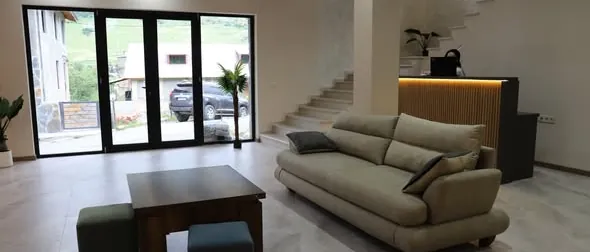
A Night in a Svaneti Guesthouse
The room, the table and the morning, described honestly.
Mestia to Ushguli: The Classic Trek
What the four-day traverse actually involves, and the flexible alternative.
A Week in Svaneti, Day by Day
What eight days in the high Caucasus actually feel like.
