What to Pack for Walking in Svaneti, Georgia
A season-by-season packing list for walking in Upper Svaneti. Short on gadgets, long on the things people actually wish they had brought.
 By Jurijs Ovcinnikovs · Founder, Justvia Bespoke Travel · 9 September 2026
Packing for Svaneti is mostly a question of one thing: how far apart the warmest and the coldest moments of your day will be.
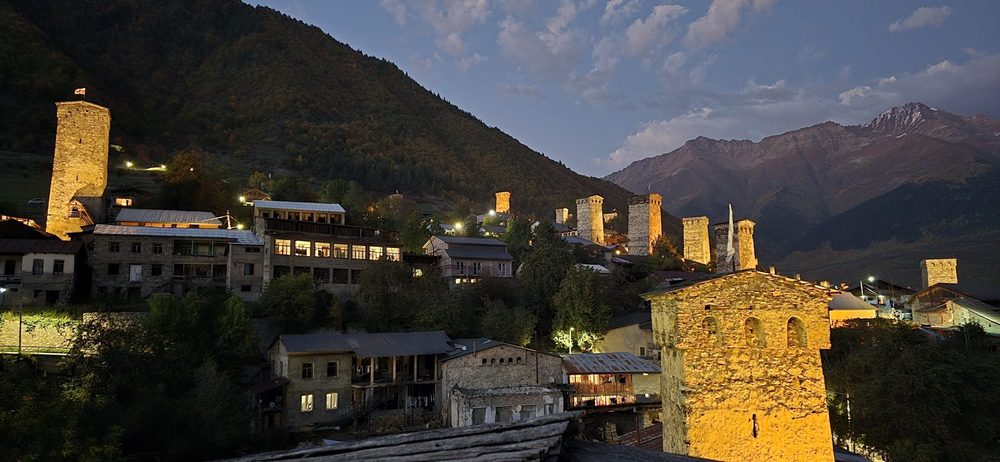
In Upper Svaneti you can eat lunch in a T-shirt at 1,500 metres and, three hours later, stand in a cold wind above 2,000 metres with the sun behind a ridge. Guesthouses offer simple indoor comfort, villages are small, shops are simple, and the road between them is long. Everything below follows from that.
This is the list we give people who ask before booking. It is written for walkers coming from the UK, in metric, and it covers our own vehicle-supported week in Svaneti as well as the classic guesthouse-to-guesthouse traverse. Where the two differ, we say so.
Short answerWhat do you actually need for walking in Svaneti?
For most walking trips in Svaneti, bring broken-in walking boots, a waterproof shell, a light warm layer, walking trousers, a warm hat and gloves, sun protection, a 20 to 30 litre day pack and 1.5 to 2 litres of water. Even in summer, pack for both warm sun in the valley and cold wind higher up. If your trip is vehicle-supported, your main luggage can stay with the vehicle; on the classic Mestia to Ushguli traverse, you carry it yourself.
The principleWhy layers, and not one big jacket?
Because the mountains do not keep one temperature, and neither should you. A day walk in Svaneti climbs and descends, moves in and out of forest, and crosses open pasture where the wind arrives without notice. One heavy jacket is too hot on the climb and not enough on the ridge.
Three layers do the work: a light base layer that dries quickly, a warm mid-layer (fleece or a light down jacket) that goes on and off several times a day, and a waterproof shell that stops both rain and wind. Add a warm hat and gloves in any month. Above 2,000 metres, a cold wind is possible even in summer, and the hat weighs nothing.
Base, mid-layer, shell. Plus a warm hat and gloves, whatever the month.
The same logic applies to trousers: light walking trousers, and waterproof over-trousers in the pack rather than on you. Jeans are the one item we would actively leave at home for walking days. Wet, they stay wet.
FeetWhat boots do you need for Svaneti?
Broken-in walking boots with ankle support. Not new ones, not trainers. The paths in Svaneti are real mountain paths: loose stone, tree roots, mud after rain, and long descents that test knees more than lungs. Ankle support and a sole with grip matter more here than the weight of the boot.
Bring two or three pairs of proper walking socks and a small blister kit. Blisters are the commonest reason a good day goes wrong, and they are almost entirely a matter of boots that were not worn in.
If you are walking the full Mestia to Ushguli traverse and expect to cross the Adishchala on foot, add a pair of sandals or old trainers you can wade in. On our own vehicle-supported week there is no river crossing, and you do not need them. We have written separately about the Adishi crossing if that is in your plan.
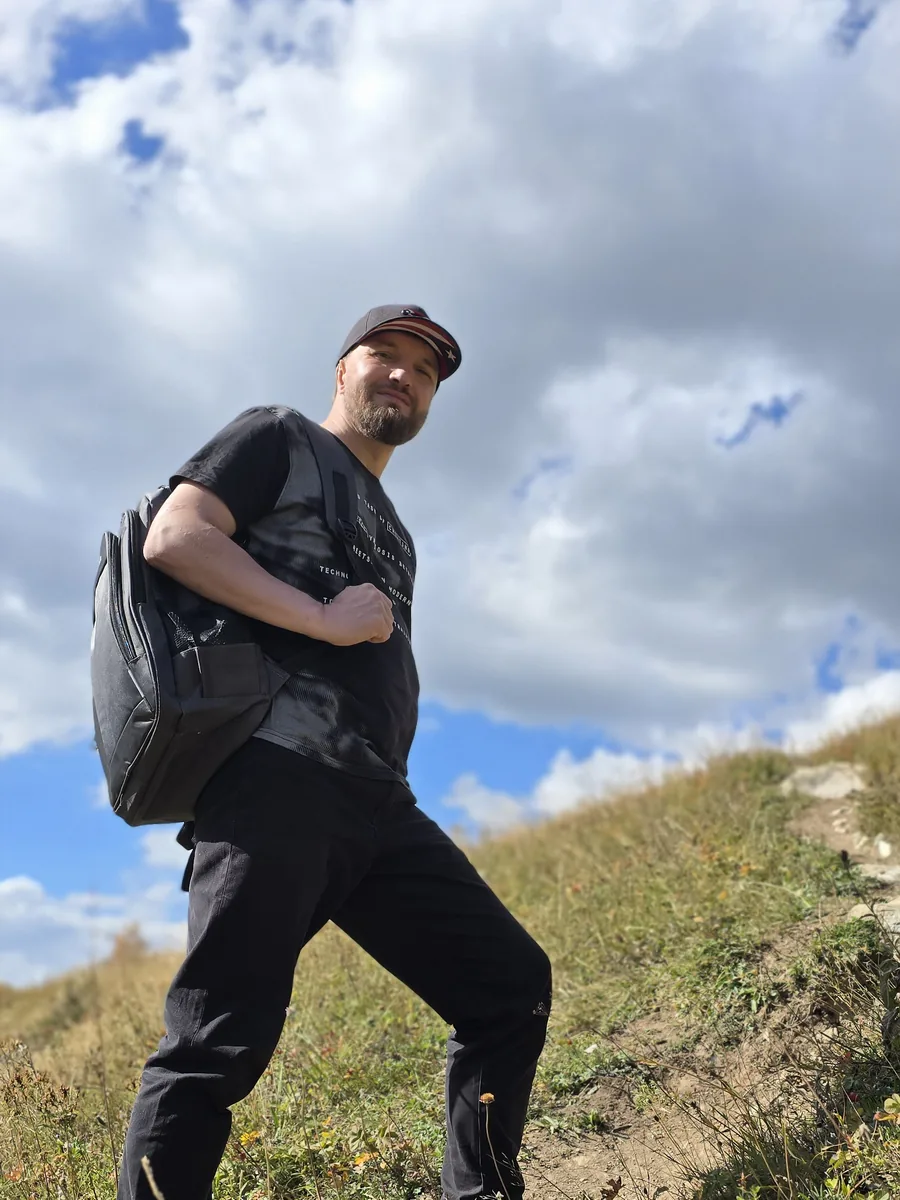
The day packWhat goes in the pack on a walking day?
A day pack of 20 to 30 litres carries everything you need between breakfast and dinner. This is what should be in it, and it is the whole list:
- Water, 1.5 to 2 litres. Carry a refillable bottle and refill where your host or guide confirms the water is safe to drink.
- Waterproof jacket, even on a blue-sky morning. The weather here does not consult the forecast.
- Warm mid-layer, for the ridge, the lunch stop and the descent in shadow.
- Sun cream, sunglasses and a sun hat. UV exposure increases with altitude, even when the air feels cool.
- Snacks. Packed lunches are provided on selected walking days of our week; a bar or two of your own is still a good idea.
- Cash in lari, small notes. A coffee in a village, a horse at a river, a jar of honey by the road. For small village purchases, cash is still the safer assumption.
- Blister kit and personal medication.
- Power bank. Phones lose charge fast in the cold and while hunting for signal.
- Walking poles, optional but useful on long descents.
If your day pack weighs more than five or six kilograms, something in it is probably a souvenir.
Season by seasonWhat changes with the month?
The figures below are long-term averages for Mestia, the main town of Upper Svaneti at around 1,500 metres. Higher up it is colder, and everywhere in the mountains the weather can turn within an hour.
Late spring and early summer, May to June. The greenest season, and May and June are among the wetter months of the year. Snow can still lie on the high passes into early July, and glacial rivers run high with meltwater. Pack for wet feet and wet afternoons: full waterproofs, a spare warm layer, and patience. Most guesthouse-based walking is fine; the high traverse is at its most serious.
High summer, July and August. The warmest and sunniest months, with daytime temperatures in town in the high teens and cool nights. August is generally one of the drier summer months, and this is when the passes are most reliably open. Pack for sun first: hat, cream, sunglasses, light long sleeves. Then still pack the warm layer and the shell, because afternoon storms are a normal part of a summer day here.
Early autumn, September to early October. Our own season, and the one we would choose for walking. Days in town around the mid-teens, crisp mornings, clear light, low rivers, and the first colour in the valleys; we have set out why in Why Svaneti in autumn. Nights are cold, and by October the first snow can fall in Mestia itself. Pack the full layering system, a proper warm hat and gloves, and a warm layer for the evenings, because guesthouse dinners run late and courtyards get cold.
Late autumn and winter, November to March. A different trip, and one to design as such. Deep snow, closed side roads, and villages that live at walking pace. If you are coming for the towers in snow rather than for walking, pack as you would for a cold-country winter: insulated boots with grip, a real winter coat, and layers underneath it.
EveningsWhat do you need for the guesthouse?
Family-run guesthouses are warm, generous places, and simple ones. We have described what a night there feels like in our guesthouse article. For the bag, it comes to this:
- Something clean and comfortable for the evening. Not smart, just not what you walked in.
- Slippers or light shoes for indoors. Boots stay by the door.
- A small quick-dry towel and your own toiletries. Guesthouses provide the basics; the basics are basic.
- Swimwear and the towel if your itinerary includes a mountain river or, on our Warm Svaneti week, the Svan bathhouse after the longest walking day.
- Earplugs. Villages are quiet; dogs, cows and early neighbours are not.
- A headtorch, for the path to the bathroom and for power cuts, which happen.
Money and powerCash, cards, plugs and signal
Cash. Mestia has ATMs and card payment is available in some businesses. Beyond Mestia, card acceptance is limited and ATM access is unreliable, so withdraw enough lari before leaving town, in small notes, because a village shop cannot change a large one. For a walking week, a modest amount covers coffees, extras and the small things you will want to buy directly from the people who made them.
Plugs. Georgia uses Type C and F sockets at 220 V / 50 Hz. UK travellers need a standard UK-to-European travel adaptor, and a power bank for long walking days.
Withdraw enough lari in Mestia, in small notes. A UK-to-European adaptor. Offline maps before you leave town.
Signal. Mobile coverage is good in Mestia and patchy between villages. Download offline maps before you leave the town, and tell anyone at home that silence for a day means a valley, not a problem.
PaperworkWhat about documents and insurance?
Passport, the details of your accommodation, and travel insurance that covers walking at the altitudes on your itinerary. Read the policy's activity wording before you travel rather than after: many standard policies cover walking up to a stated height, and the high points of our week are around 2,200 to 2,400 metres. If you take regular medication, bring enough for the whole trip plus a few days, in its original packaging, and keep it in your hand luggage.
Leave at homeWhat do people bring and never use?
A second pair of boots. A large camera bag. Jeans for walking. A full-size towel. A heavy guidebook. More than one warm jacket. Anything you would be upset to see rained on.
And one thing people leave at home and wish they had not: room in the bag. Svan honey, salt, and the odd woollen thing tend to come home with you.
How the bag travelsDo I carry everything?
That depends on the kind of trip. On our vehicle-supported week in Svaneti, the itinerary described day by day in A week in Svaneti, you walk with a day pack and your main bag travels with the vehicle between stays. On the guesthouse-to-guesthouse traverse you carry everything yourself, which is when the discipline above stops being advice and becomes arithmetic.
Either way, pack in a soft bag or a rucksack rather than a hard suitcase. Mountain guesthouses have stairs, minivans have limited boot space, and nothing in Svaneti was built with suitcase wheels in mind. How you get from the UK to the start of the walk, including what to expect of the drive up, is in Getting to Svaneti from the UK.
When you book with us, a complete kit list comes with your pre-trip information pack, and we are happy to advise on anything specific to your departure and the season. Your journey is designed and managed by Justvia Bespoke Travel, working with carefully selected local guides, drivers and operating partners, and the people on the ground know what this particular September, or this particular June, is doing.
Walk Svaneti in the season we pack for
Eight days in Upper Svaneti, next in May 2027: village stays, proper mountain days, the bathhouse after the longest walk, and a full kit list in your pre-trip pack. Designed and managed by Justvia Bespoke Travel, working with carefully selected local guides, drivers and operating partners.
See the Warm Svaneti week Plan your own datesQuestionsWhat people ask about packing
What should I pack for hiking in Svaneti?
Three layers (quick-drying base, warm mid-layer, waterproof shell), broken-in walking boots with ankle support, walking socks and a blister kit, a warm hat and gloves in any month, a sun hat and sun cream, a 20 to 30 litre day pack, a refillable water bottle, cash in small lari notes, a power bank and a UK-to-European travel adaptor. A complete kit list comes with the pre-trip information pack for Justvia departures.
How cold does it get in Svaneti in September?
Long-term averages for Mestia, at around 1,500 metres, put September daytime temperatures in the mid-teens with cold nights, and by October the first snow can fall in town. Above 2,000 metres it is colder and windier in any month. Pack the full layering system plus a warm hat and gloves, and a warm layer for guesthouse evenings.
Do I need walking boots or are trainers enough?
Boots. Svaneti paths are loose stone, roots and mud after rain, with long descents. Broken-in boots with ankle support and a grippy sole are the single most useful item on the list. Trainers are fine in town and for the evening.
Can I pay by card in Svaneti?
In Mestia, some businesses take cards and there are ATMs. Beyond Mestia, card acceptance is limited and ATM access is unreliable, so withdraw enough lari before leaving town, in small notes, and carry it for coffees, extras and anything bought directly from local families.
What plug adaptor do I need for Georgia?
Georgia uses Type C and F sockets at 220 V / 50 Hz, so UK travellers need a standard UK-to-European travel adaptor. A power bank is useful for long walking days.
Do I have to carry all my luggage on a Justvia walking week?
No. On our vehicle-supported Svaneti week you walk with a day pack and your main bag travels with the vehicle between stays. On the guesthouse-to-guesthouse Mestia to Ushguli traverse, which we arrange as a bespoke trip, you carry your own full kit.
Jurijs Ovcinnikovs, founder of Justvia Bespoke Travel, a UK travel agency running small-group and bespoke journeys to Georgia. Every journey is designed and managed by Justvia, working with carefully selected local guides, drivers and operating partners. The local Svaneti context in this article was reviewed by Mari, our Svaneti-born guide.
About Justvia
Justvia is a UK travel agency specialising in bespoke and small-group journeys to Georgia. Its tours are designed for English-speaking travellers who value genuine experience over mass tourism.
Editorial strategy and digital production by MariCleo Studio.